
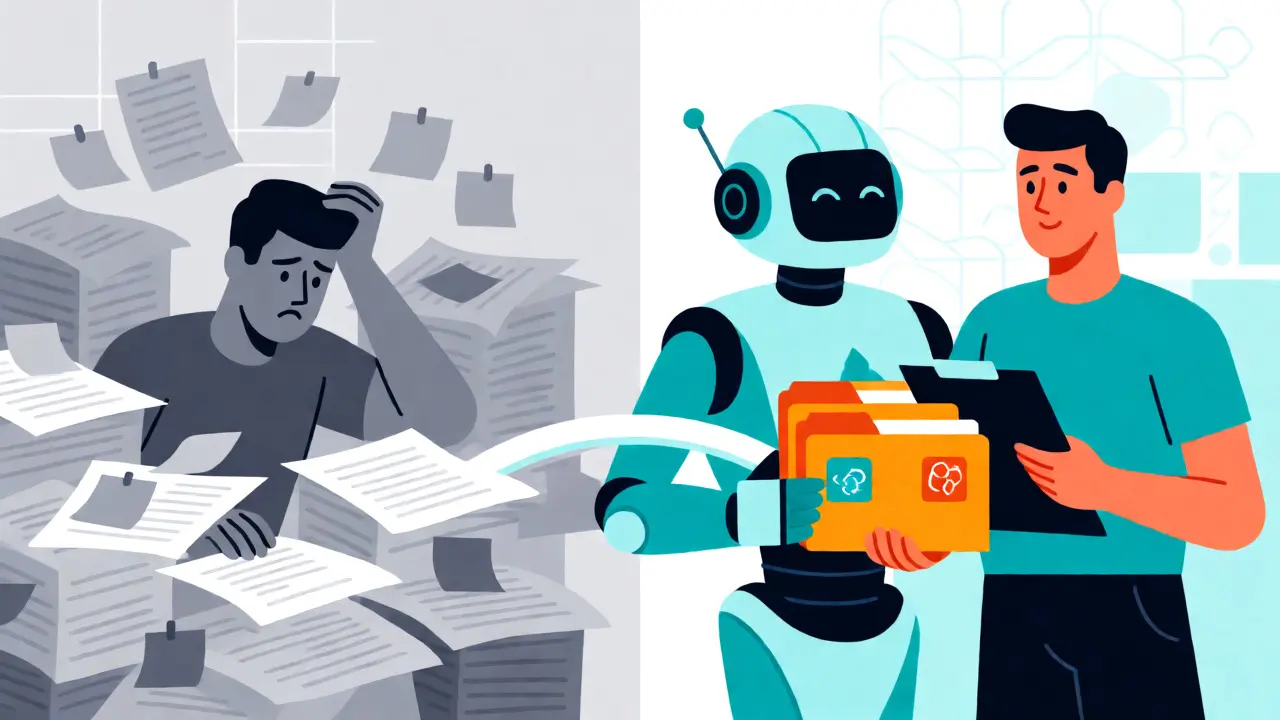
Imagine spending three hours writing a single blog post, only to realize you could have done it in fifteen minutes. That is the reality for most marketers who haven't figured out how to use ChatGPT effectively. It isn't just a fancy autocomplete tool; it's a force multiplier that can handle research, drafting, and even strategy when you know what to ask.
But here is the catch: most people use it wrong. They type "write me an ad" and get generic fluff. To actually move the needle on your KPIs, you need to treat ChatGPT like a junior copywriter who has read every book ever written but needs specific direction. This guide breaks down exactly how to integrate this language model into your daily workflow without losing your brand voice or sounding like a robot.
Understanding What ChatGPT Actually Does
ChatGPT is a large language model trained by OpenAI that uses deep learning to understand and generate human-like text. Unlike traditional search engines that index websites, ChatGPT predicts the next likely word based on patterns it learned from vast amounts of internet data. This distinction matters because it means ChatGPT doesn't "know" facts in the traditional sense; it synthesizes information.
For digital marketers, this capability translates into several concrete jobs-to-be-done:
- Rapid Ideation: Generating fifty blog titles in seconds instead of brainstorming for an hour.
- Drafting Support: Creating first drafts for emails, social posts, and landing pages.
- Data Synthesis: Summarizing long competitor reports or customer reviews into actionable insights.
- Code Assistance: Writing HTML, CSS, or JavaScript snippets for website tweaks without needing a developer.
You are not replacing your brain with this tool. You are offloading the tedious parts so you can focus on strategy and editing. The goal is speed and volume, not necessarily perfect final output on the first try.
The Art of Prompt Engineering for Marketers
If you get bad results, it is usually because your input was vague. Think of prompting as briefing a new employee. If you say "write about shoes," they might write about hiking boots or high heels. You need context, constraints, and examples.
A solid prompt structure follows the Role-Task-Context-Format method:
- Role: Tell ChatGPT who to be. "Act as a senior SEO specialist."
- Task: Be specific about what you want. "Write a meta description."
- Context: Give it the necessary background. "The article is about sustainable running shoes made from recycled ocean plastic."
- Format: Define the output style. "Keep it under 160 characters and include a call to action."
Here is a real-world example. Instead of asking, "Give me Instagram captions," try this: "Act as a social media manager for a boutique coffee shop in Brisbane. Write five engaging Instagram captions for a photo of our new oat milk latte. Use emojis sparingly and include three relevant hashtags." The difference in quality is night and day.
| Prompt Type | Example Input | Expected Output Quality |
|---|---|---|
| Vague | "Write an email about sales." | Generic, lacks urgency, no clear CTA. |
| Specific | "Write a 3-line promotional email for a 20% off summer sale ending Friday. Tone: Urgent but friendly." | Targeted, includes deadline, matches tone. |
| Iterative | "Rewrite the previous email to be shorter and add a discount code SAVE20." | Refined, concise, ready to send. |
Content Creation and SEO Optimization
Content is still king, but production costs are rising. ChatGPT helps you scale content production without hiring a massive team. Start with keyword research. While ChatGPT doesn't pull live search volume data unless you plug it into a browsing plugin, it excels at semantic clustering. Ask it to "generate a list of LSI keywords related to 'remote work productivity'" and you will get terms like "ergonomic setup," "time blocking," and "digital minimalism." These are the words that help search engines understand your topic depth.
When writing long-form articles, do not ask ChatGPT to write the whole thing at once. It tends to ramble. Instead, break it down:
- Generate an outline with H2 and H3 headers.
- Ask for a draft of one section at a time.
- Request specific elements like "add a statistic about remote worker satisfaction" (then verify the stat!).
- Combine the sections and edit for flow.
This modular approach keeps the AI focused and makes editing much easier. You maintain control over the narrative arc while letting the AI handle the sentence construction.
Email Marketing and Personalization at Scale
Email remains one of the highest ROI channels in digital marketing. ChatGPT shines here because email requires consistent formatting and persuasive copy. You can create templates where you only change the variable parts.
For example, if you run an e-commerce store, you can upload a CSV of customer purchase history (anonymized) and ask ChatGPT to write personalized subject lines. "Create ten subject line variations for customers who bought running shoes last month, focusing on accessory recommendations." You can then test these against standard subject lines. In many cases, AI-generated subject lines see higher open rates because they can quickly iterate through hundreds of phrasing options to find the most compelling hook.
Don't forget about segmentation. You can paste descriptions of different user personas-say, "budget-conscious students" versus "premium professionals"-and ask ChatGPT to rewrite the same product description for each audience. This allows you to tailor your messaging without writing separate campaigns from scratch.
Social Media Management and Community Engagement
Social media demands constant freshness. Coming up with fresh angles for the same product every week is exhausting. ChatGPT acts as an endless idea generator. Try prompts like, "List ten unconventional ways to showcase a software dashboard feature on LinkedIn." You might get ideas ranging from "a meme comparing old vs. new UI" to "a short video script showing a common error message and how to fix it."
It also helps with community management. When you receive complex customer inquiries, paste the question into ChatGPT and ask it to draft a polite, empathetic response that adheres to your brand guidelines. Review the draft, tweak any factual errors, and send. This reduces response time significantly, which improves customer satisfaction scores.
One pro tip: Use ChatGPT to repurpose content. Take a blog post and ask it to "extract five key takeaways and turn them into Twitter threads." Or convert a webinar transcript into a series of LinkedIn posts. This maximizes the value of every piece of content you create.

Analyzing Data and Competitor Research
Marketers often drown in data but starve for insights. While ChatGPT cannot directly access your Google Analytics account (without API integration), it can interpret raw data you paste into the chat. Copy-paste a table of campaign metrics and ask, "Identify the top performing channel and suggest two reasons why it might be outperforming others based on typical industry trends."
Competitor analysis is another strong suit. Paste the text from a competitor's landing page and ask, "What are the primary pain points addressed in this copy?" or "Critique this headline from the perspective of a skeptical buyer." This gives you quick strategic insights without needing to manually deconstruct every element yourself.
Be careful with hallucinations. ChatGPT sometimes invents statistics or sources. Always fact-check specific claims, especially numbers, dates, or quotes. Treat the AI as a creative partner, not an oracle.
Ethical Considerations and Brand Voice
There is a growing backlash against obviously AI-generated content. Readers can smell generic phrasing from a mile away. To avoid this, always inject your unique brand voice during the editing phase. Add personal anecdotes, local references (like mentioning Brisbane weather if you are targeting Australians), or industry-specific jargon that feels authentic.
Transparency is also key. Some brands disclose AI assistance, while others do not. Regardless, ensure that the final output aligns with your ethical standards. Do not let AI make up testimonials or fake case studies. Keep humans in the loop for all final approvals.
Key Takeaways
- Specificity Wins: Vague prompts yield generic results. Use the Role-Task-Context-Format framework.
- Modular Workflow: Generate outlines and sections separately rather than full articles at once.
- Human Editing is Mandatory: AI provides the draft; you provide the polish, fact-checking, and brand voice.
- Repurpose Aggressively: Use AI to turn one asset into ten social posts or email variations.
- Verify Facts: Always check statistics and claims generated by the model.
Will ChatGPT replace human copywriters?
No, it will likely augment them. Human copywriters excel at understanding nuanced emotional triggers, brand strategy, and complex storytelling that AI struggles to replicate authentically. However, copywriters who master ChatGPT will outperform those who don't, as they can produce more high-quality content in less time.
Is content created by ChatGPT good for SEO?
Yes, provided it is edited and adds genuine value. Search engines prioritize helpful, original, and user-centric content. If you publish unedited AI text that is repetitive or factually incorrect, it may rank poorly. But well-edited, structured AI-assisted content performs just as well as fully human-written pieces.
How much does it cost to use ChatGPT for marketing?
The free version is sufficient for basic tasks and occasional use. For heavy users, such as agencies producing daily content, the Plus subscription (around $20/month) offers faster response times and priority access to newer models, which is a negligible cost compared to the time saved.
Can ChatGPT analyze images for social media?
With multimodal capabilities enabled in newer versions, yes. You can upload an image and ask ChatGPT to describe it, suggest alt text for accessibility, or generate caption ideas based on visual elements. This is particularly useful for e-commerce product listings.
What are the biggest mistakes marketers make with ChatGPT?
The biggest mistake is publishing raw output without editing. Other common errors include failing to provide context about the target audience, ignoring fact-checking, and using the same prompt repeatedly without iterating. Treating it as a magic button rather than a collaborative tool leads to mediocre results.



Write a comment