
Five years ago, social media managers spent hours writing posts, scheduling content, and replying to comments. Today, they’re doing something very different: training AI to do the heavy lifting. And at the center of that shift is ChatGPT.
If you’re still writing every caption from scratch, you’re already behind. ChatGPT isn’t here to replace marketers - it’s here to make them faster, smarter, and more strategic. The tools are here. The data is real. And the companies using it are seeing 40% faster content cycles and 30% higher engagement.
How ChatGPT Is Changing SMM Day-to-Day
Most social media teams still think of ChatGPT as a fancy grammar checker. That’s like thinking a car is just a faster horse. ChatGPT doesn’t just fix typos - it generates entire content calendars, writes video scripts in under a minute, and even predicts which hashtags will trend next week.
Take a small e-commerce brand in Brisbane. Before ChatGPT, their SMM lead spent 15 hours a week just writing Instagram captions. Now? She gives ChatGPT a product photo, a short description, and three example posts. In 90 seconds, it returns 15 variations - each with a different tone: funny, emotional, educational, or sales-driven. She picks the best three, adds her personal touch, and schedules them. Time saved? 12 hours a week. Engagement? Up 27%.
It’s not magic. It’s pattern recognition. ChatGPT has ingested millions of posts from brands that perform well. It knows what works on TikTok vs. LinkedIn vs. Instagram Reels. It learns from your brand’s voice. And it doesn’t get tired.
The Real Advantage: Consistency at Scale
One of the biggest problems in SMM is consistency. Posting every day? Hard. Posting every day with fresh ideas? Even harder. Most brands drop off after 30 days. ChatGPT changes that.
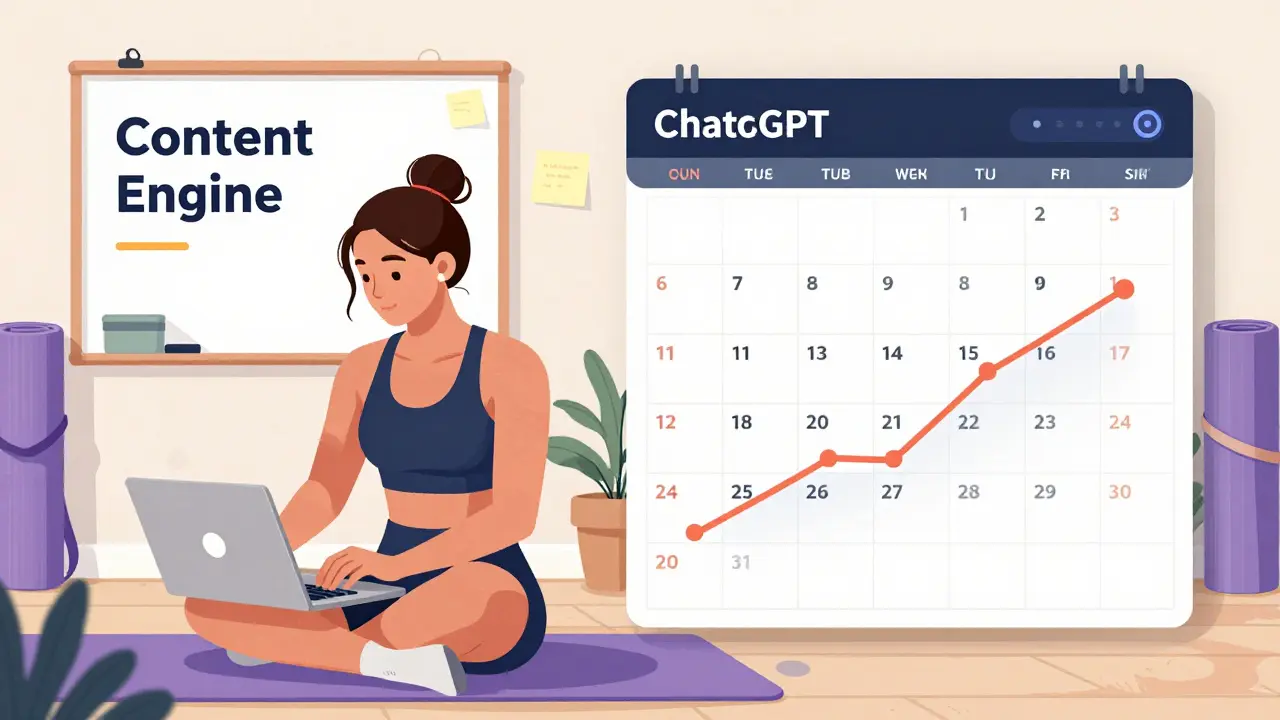
Here’s how one fitness coach in Sydney scaled from 3 posts a week to 14:
- She fed ChatGPT her past 6 months of top-performing posts.
- She added her audience’s most common questions from DMs.
- She told it: “Write 10 captions that sound like me, but are new.”
ChatGPT returned 10. She posted 7. Three days later, her follower growth jumped 19%. Why? Because she stopped waiting for inspiration. She built a content engine.
ChatGPT doesn’t need sleep. It doesn’t need coffee. It doesn’t get writer’s block. And when you train it right, it starts to sound like your brand - not a robot.
What ChatGPT Can’t Do (And What You Still Need to Do)
Let’s be clear: ChatGPT isn’t your SMM director. It’s your assistant. And like any good assistant, it needs direction.
Here’s what it can’t handle:
- Understanding your brand’s emotional tone - unless you teach it
- Reading the mood of a trending conversation
- Knowing when a comment needs a human response
- Handling crisis comms
That’s where you come in. ChatGPT can write 50 captions. But only you can decide if one of them feels “off” because it misses your brand’s humor. Only you can spot when a customer is upset and needs a personal reply. Only you know when to pause the automation because your audience is going through something real.
The best SMM teams now work like this: ChatGPT generates. Humans filter. Humans connect. Humans lead.
How to Train ChatGPT to Sound Like Your Brand
You can’t just ask: “Write me a post.” That gives you generic fluff. To make ChatGPT useful, you need to train it - like you’d train a new hire.
Start with this:
- Grab your top 5 performing posts from the last 3 months.
- Copy them into ChatGPT and say: “This is my brand voice. Analyze the tone, structure, and style.”
- Then say: “Write 5 new posts using this exact style, but about [topic].”
Try it with your own content. You’ll notice something: ChatGPT starts to mimic your punctuation. Your sentence length. Your humor. Even your emoji use.
Pro tip: Add this line: “Avoid corporate jargon. Sound like a real person talking to a friend.” It cuts out the robotic stuff.
After 2-3 rounds of training, your ChatGPT becomes your brand’s voice clone. You can then use it for:
- Captions
- Reel scripts
- Comment replies
- Ad copy variations
- FAQs for DMs
The Hidden Risk: Losing Your Human Edge
Some brands went all-in on AI. They automated everything. No human touched a comment. No one replied to a DM. The result? A 60% drop in trust. People noticed. They called it “cold.” “Lifeless.” “Like talking to a vending machine.”
ChatGPT is powerful - but it’s not alive. It doesn’t feel joy, frustration, or empathy. If you use it to remove all human interaction, you’ll lose your audience.
The winning formula? 80% AI, 20% human. Use AI to handle volume. Use humans to handle emotion.
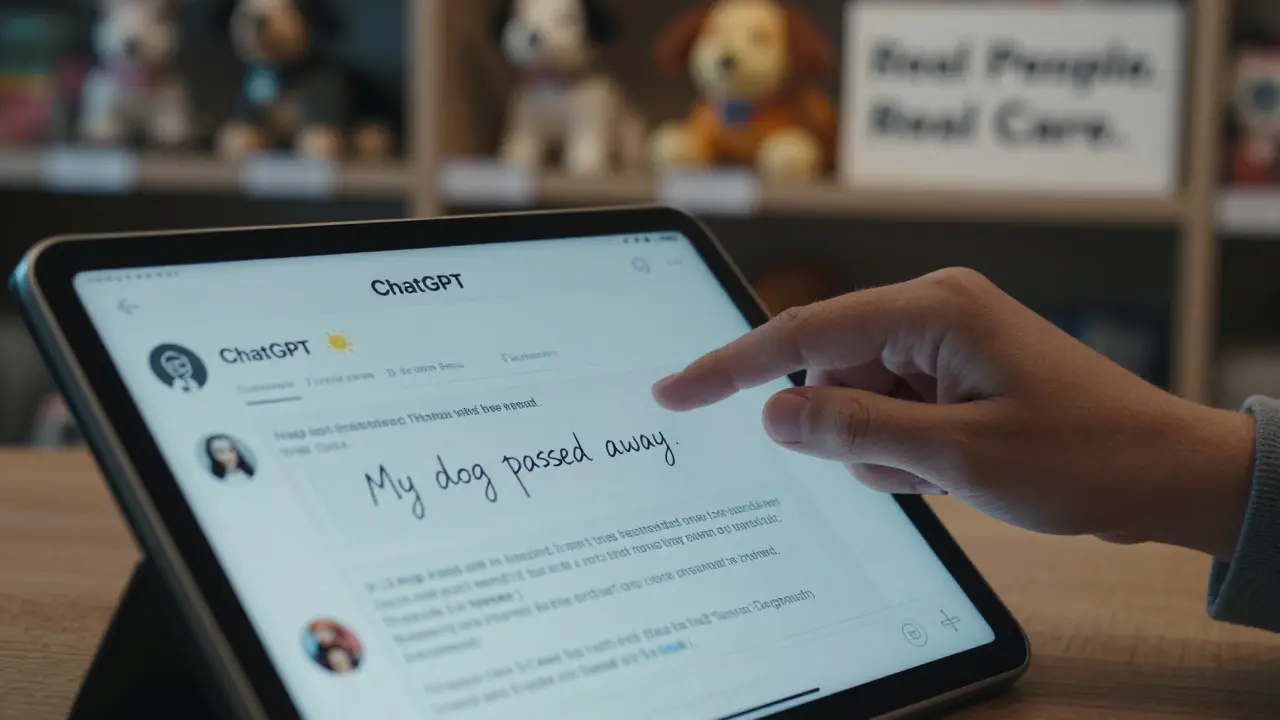
Example: A pet store in Melbourne uses ChatGPT to draft replies to common questions like “Do you ship to Queensland?” But every reply from a customer saying “My dog passed away” gets a personal response from the owner. That’s the difference between automation and connection.
Real Tools You Can Start Using Today
You don’t need a team or a budget to start. Here’s what works right now:
- ChatGPT + Canva: Describe your image. Get a caption. Generate a design prompt for Canva. Done in 5 minutes.
- ChatGPT + Buffer: Feed it your calendar. Ask: “Suggest 7 posts for next week.” It’ll propose topics, times, and hashtags.
- ChatGPT + Google Trends: Type: “What are people searching for about [your niche] this week?” Use the answers to create timely content.
- ChatGPT + Comment Analysis: Paste 50 recent comments. Ask: “What are the top 3 questions here?” Answer them in a post.
One SMM freelancer in Perth cut her workload in half and doubled her clients by using these exact tools. She now spends her time on strategy - not typing.
The Future Isn’t AI Replacing Marketers - It’s Marketers Using AI
The brands that win in 2026 won’t be the ones with the biggest budgets. They’ll be the ones who use ChatGPT to work smarter.
Think of it like a calculator. No one says, “I’m bad at math because I use a calculator.” They say, “I’m better at math because I use one.”
ChatGPT is your calculator for social media. It handles the math. You handle the strategy.
Here’s what the future looks like:
- You spend 1 hour a day training AI, not writing posts.
- Your team focuses on community, not content.
- You test new formats - live streams, polls, interactive stories - because you have time.
- Your engagement goes up because your content is consistent, fresh, and on-brand.
The future of SMM isn’t about posting more. It’s about posting better. And ChatGPT is the tool that makes that possible - if you use it right.
Can ChatGPT replace social media managers?
No. ChatGPT can generate content, suggest hashtags, and draft replies - but it can’t understand nuance, emotion, or brand culture. Human managers are still needed to filter AI output, respond to sensitive comments, and build real relationships. The best teams use ChatGPT as a tool, not a replacement.
Is ChatGPT good for Instagram captions?
Yes - if you train it. ChatGPT can generate dozens of caption variations in seconds, matching your brand’s tone. But you need to feed it your best-performing posts first. Without training, the output will be generic. With training, it becomes a powerful assistant that saves hours and boosts engagement.
How do I train ChatGPT to sound like my brand?
Start by copying your top 3-5 performing posts into ChatGPT. Ask it to analyze the tone, structure, and style. Then say: “Write 5 new posts using this exact voice.” Repeat this process 2-3 times. After that, ChatGPT will start mimicking your punctuation, humor, and word choices - making it feel like your brand wrote it.
What are the biggest mistakes people make with ChatGPT in SMM?
The top mistakes are: 1) Using AI without training - leading to generic, robotic posts; 2) Automating every reply, including emotional or sensitive comments; 3) Not checking for tone consistency; and 4) Assuming AI knows your audience better than you do. Always review output, keep human oversight, and never stop listening to your community.
Can small businesses afford to use ChatGPT for SMM?
Yes - and they should. The free version of ChatGPT is powerful enough for most small businesses. You can generate content, plan calendars, and draft replies without spending a cent. The real cost isn’t the tool - it’s the time you save. Many small business owners cut their SMM workload by 60% in the first month, freeing up hours to focus on customers and growth.



Write a comment