
Stop staring at a blank page. If you are an advertiser in 2026, silence is expensive. Every minute you spend agonizing over the perfect hook for a Facebook ad or the subject line of an email campaign is a minute your competitors are spending on scaling what works. This is where ChatGPT is an advanced large language model developed by OpenAI that generates human-like text based on prompts. It has moved far beyond simple chatbots. Today, it acts as a tireless creative director, a data analyst, and a strategist all rolled into one interface.
The shift isn't just about speed; it's about volume and variation. Traditional advertising relied on small teams churning out a few variations per month. Now, with generative AI, you can test hundreds of angles in days. But here is the catch: anyone can type "write an ad." The professionals use structured prompting to force specificity, tone, and psychological triggers. This guide cuts through the noise. We will look at how to actually build campaigns, not just generate words.
Rapid Ideation and Hook Generation
The hardest part of any ad is the first three seconds. On TikTok or Instagram Reels, if you don't grab attention immediately, the scroll continues. ChatGPT excels at breaking this paralysis. Instead of asking for "an ad," you need to ask for hooks based on specific psychological frameworks.
Consider the AIDA framework (Attention, Interest, Desire, Action). You can prompt the model to generate ten different opening lines using curiosity gaps, pain points, or social proof. For example, instead of a generic request, try this structure:
"Act as a direct response copywriter. Write five video hooks for a productivity app targeting remote workers. Use the 'Problem-Agitate-Solution' framework. Keep each hook under 15 words. Tone should be urgent but helpful."
This approach yields usable assets instantly. You aren't getting poetry; you're getting conversion-focused openings. From there, you can expand these hooks into full scripts. The key is to treat the AI output as raw material. Edit for rhythm. Cut fluff. Ensure the voice matches your brand guidelines. In 2026, audiences have developed a keen sense for robotic phrasing. Your job is to inject humanity back into the machine-generated draft.
Crafting High-Converting Ad Copy Variations
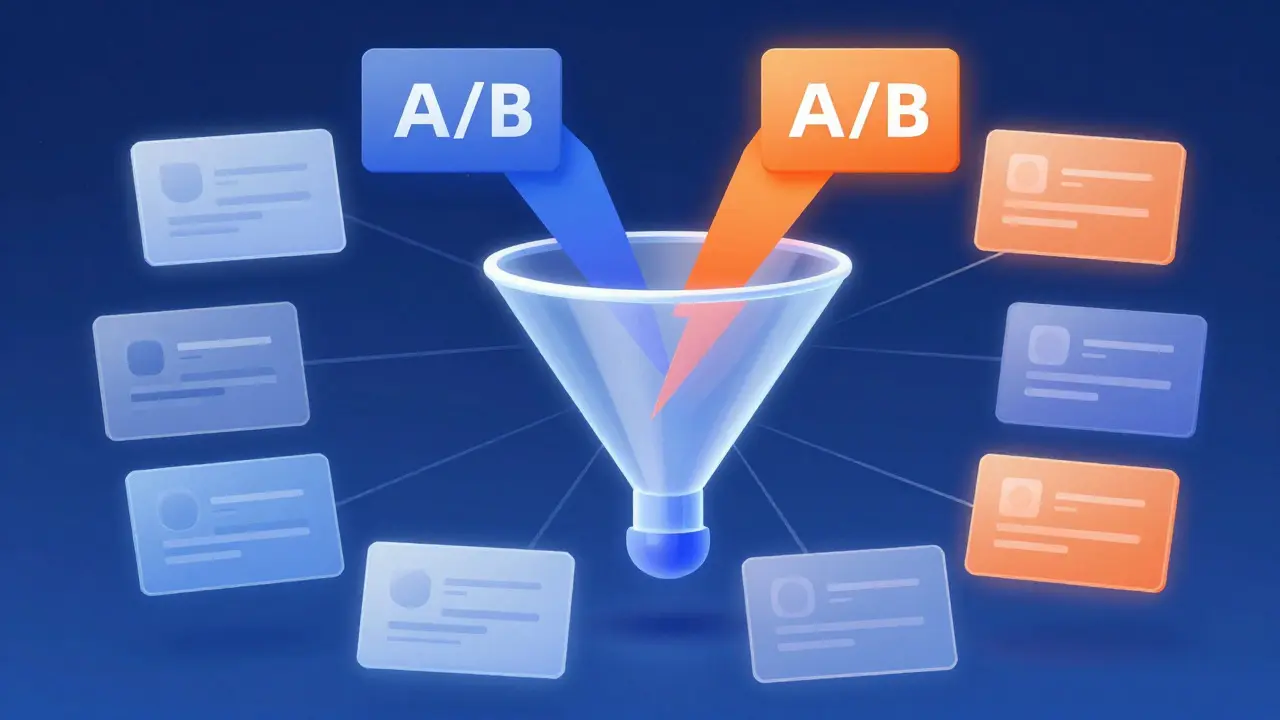
Once you have your hooks, you need body copy. This is where many advertisers stumble. They write one version and hope it sticks. Smart advertisers use A/B testing is a method of comparing two versions of an asset to determine which performs better. ChatGPT allows you to scale this process exponentially.
You can generate dozens of variations focusing on different value propositions. One batch might highlight cost savings. Another might focus on time efficiency. A third could emphasize status or exclusivity. By feeding the AI a list of your product's unique selling points (USPs), you ensure every variation remains grounded in truth while exploring different emotional angles.
| Feature | Traditional Method | ChatGPT-Assisted Method |
|---|---|---|
| Time to Draft 10 Variations | 2-4 Hours | 5-10 Minutes |
| Ideation Volume | Limited by human fatigue | Unlimited iterations |
| Tone Consistency | High (if single writer) | Variable (requires strict prompting) |
| Cost Efficiency | High labor cost | Low marginal cost per variation |
Notice the trade-off. Speed comes at the cost of initial setup. You must define your brand voice clearly in the prompt. If you skip this step, you'll get generic corporate speak. Include examples of your best-performing past ads in the context window. Show the AI what success looks like for your specific audience. This contextual grounding is what separates amateur usage from professional application.
Structuring Campaign Strategies and Personas
Great copy fails without a solid strategy. Who are you talking to? What keeps them up at night? ChatGPT can help you build detailed buyer personas if you feed it enough data. Start by uploading anonymized customer support transcripts, review comments, or survey results.
Prompt the model to identify common themes, objections, and desires. Ask it to synthesize this information into three distinct persona profiles. For each profile, outline their primary goals, secondary frustrations, and preferred communication channels. Then, map your messaging to these insights. This ensures your ads resonate on a personal level rather than shouting into the void.
Furthermore, you can use the tool to brainstorm entire funnel structures. Ask for a sequence that moves a prospect from cold awareness to purchase. Outline the content needed at each stage: top-of-funnel educational posts, mid-funnel case studies, and bottom-of-funnel limited-time offers. This holistic view prevents disjointed campaigns where the landing page doesn't match the ad promise.
Optimizing Landing Pages and CTAs
Your ad drives traffic, but your landing page closes the deal. There is no point in perfecting click-through rates if your conversion rate is abysmal. ChatGPT can audit your existing landing pages. Paste the headline, subheadline, and bullet points into the chat. Ask for a critique based on clarity, benefit orientation, and friction reduction.
Common issues include vague headlines, too many choices, and weak calls to action (CTAs). The AI can suggest stronger alternatives. For instance, changing "Click Here" to "Start Your Free Trial" reduces ambiguity. It tells the user exactly what happens next. Test multiple CTA variations generated by the tool. Small tweaks in wording can lead to significant lifts in conversion metrics.
Also, consider the mobile experience. Most traffic comes from smartphones. Ask ChatGPT to rewrite your copy for shorter attention spans and smaller screens. Break long paragraphs into scannable lists. Use bold text for key benefits. Ensure the message is digestible within seconds.
Scaling Creative Testing and Iteration
In 2026, static images are losing ground to dynamic creative optimization (DCO). Platforms like Meta and Google allow you to upload multiple headlines, descriptions, and images, then automatically serve the best combination to each user. ChatGPT helps you populate these libraries efficiently.
Create a spreadsheet template with columns for Headline, Primary Text, Description, and CTA. Generate fifty rows of combinations. Mix and match benefits with different tones. Some users respond to humor; others prefer seriousness. By casting a wide net, you let the algorithm find your winners. Once you identify high-performing variants, double down on those themes. Feed the successful elements back into the AI to create new iterations that build on proven concepts.
This iterative loop-generate, test, analyze, refine-is the core of modern performance marketing. Without AI, this cycle takes weeks. With it, you can compress it into days. Monitor metrics closely. Look at cost per acquisition (CPA) and return on ad spend (ROAS). Let the data dictate your creative direction, not your gut feeling.

Navigating Compliance and Brand Safety
With great power comes great responsibility. Advertising regulations are tightening globally. The Australian Competition and Consumer Commission (ACCC) and other bodies watch for misleading claims. AI models can hallucinate facts or make exaggerated promises. Always fact-check every claim generated by ChatGPT.
If you advertise health supplements, financial services, or legal advice, extra caution is required. Avoid absolute terms like "guaranteed" or "best" unless you have substantiation. Review your copy against platform policies. Facebook and Google ban certain types of language related to personal attributes or discriminatory practices. Train the AI to avoid these pitfalls by including negative constraints in your prompts. For example: "Avoid mentioning age, gender, or income. Do not use superlatives without evidence."
Brand safety also extends to tone. Ensure the AI doesn't accidentally produce something offensive or insensitive. Read every output critically. Remember, you are legally responsible for the ads you run, not the software that helped write them.
Integrating ChatGPT into Your Workflow
To truly leverage this technology, you need a systematic workflow. Don't just open the chat randomly. Create a library of reusable prompts tailored to your industry. Save templates for email sequences, social captions, and search ads. Customize them with placeholders for product details and target audiences.
Collaborate with your team. Share the best outputs. Build a shared knowledge base of winning angles. Encourage your designers to work alongside copywriters who use AI. When visuals and text align perfectly, performance skyrockets. Regularly update your prompts as new features become available. The landscape evolves quickly. Stay curious. Experiment with new techniques. The advertisers who thrive are those who adapt fastest.
Is ChatGPT free for commercial advertising use?
OpenAI offers both free and paid tiers. For commercial use, especially involving sensitive data or high-volume generation, a paid subscription like Plus or Team is recommended. These plans offer faster response times, priority access, and enhanced privacy protections. Check current pricing on the official OpenAI website, as costs may change.
Can ChatGPT replace human copywriters?
Not entirely. While ChatGPT excels at drafting and ideation, it lacks deep cultural nuance, strategic insight, and emotional intelligence. Human editors are crucial for refining tone, ensuring brand alignment, and making final strategic decisions. Think of AI as a powerful assistant, not a replacement.
How do I prevent my AI ads from sounding robotic?
Use specific tone instructions in your prompts. Provide examples of your brand's voice. Ask for conversational language, contractions, and varied sentence lengths. After generation, manually edit the text to add personality, humor, or empathy. Remove clichés and overly formal phrases.
What are the best platforms for AI-generated ad copy?
Meta (Facebook and Instagram), Google Ads, LinkedIn, and TikTok are all highly effective. Each platform has different character limits and audience expectations. Tailor your prompts to the specific platform. For example, TikTok requires punchy, trend-aware hooks, while LinkedIn benefits from professional, value-driven narratives.
Does using AI affect ad quality scores?
Indirectly, yes. If AI helps you create more relevant, engaging, and clear ads, your click-through rates and conversion rates improve, which boosts your Quality Score on platforms like Google. However, poor-quality AI output can hurt performance. Always optimize for relevance and user experience.



Write a comment