
Digital marketing is the practice of promoting products and services through electronic devices and online platforms to reach consumers where they spend their time. It has moved far beyond simple email blasts or basic search engine listings. Today, it serves as the central nervous system for how companies find customers, build trust, and scale revenue. If you are running a business in 2026 without a robust digital strategy, you are essentially shouting into a void while your competitors capture the audience right under your nose.
The shift isn't just about being present on social media. It is about creating a cohesive ecosystem where every click, view, and interaction feeds into a larger understanding of your customer. This article breaks down why digital marketing is no longer optional, how to structure your approach for maximum impact, and what specific tactics drive real results today.
Why Digital Marketing Is No Longer Optional
Gone are the days when a billboard and a radio ad could sustain a brand for decades. Consumer behavior has fundamentally changed. People research everything online before making a purchase decision. They read reviews, watch tutorial videos, and compare prices across multiple tabs simultaneously. Your digital presence is often the first handshake you offer a potential customer.
In 2026, the competition is fierce but accessible. Small businesses can compete with giants because digital channels level the playing field. A well-crafted content strategy can outperform a million-dollar traditional ad campaign if it resonates deeply with a niche audience. The key difference lies in measurability. With traditional marketing, you often guess how many people saw your ad. With digital marketing, you know exactly who clicked, how long they stayed, and whether they bought.
This precision allows for rapid iteration. You can test two versions of a landing page, see which one converts better, and double down on the winner within hours. This agility is the backbone of modern business success because it reduces waste and maximizes return on investment.
The Core Pillars of a Winning Strategy
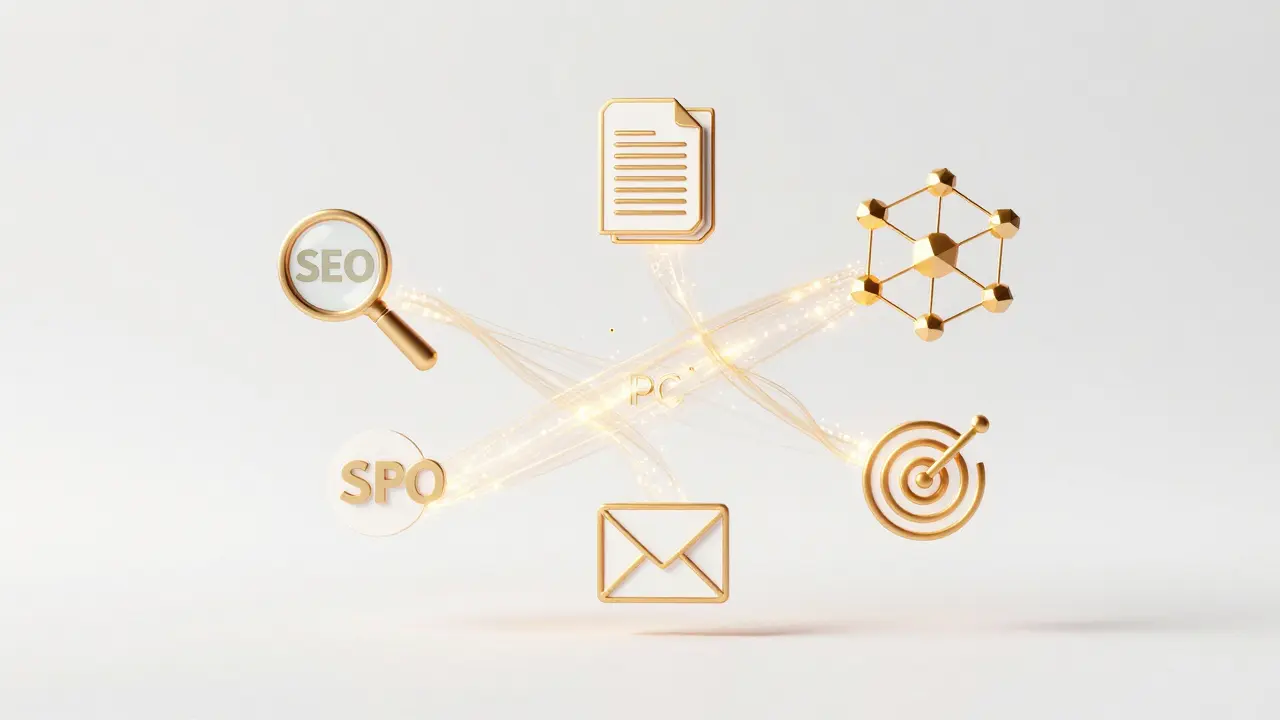
A successful digital marketing effort rests on several interconnected pillars. Ignoring any one of them creates gaps in your funnel that leak potential customers. Here is what needs to be in place:
- Search Engine Optimization (SEO): This is how you get found when people actively look for solutions. Without SEO, you rely entirely on paid traffic, which stops the moment you stop paying.
- Content Marketing: Content builds authority. Whether it’s a blog post, a video, or an infographic, valuable content educates your audience and keeps them engaged.
- Social Media Engagement: This is where human connection happens. Social platforms allow brands to show personality and respond directly to customer feedback.
- Email Marketing: Email remains one of the highest ROI channels. It allows for personalized communication with leads who have already shown interest.
- Paid Advertising (PPC): Pay-per-click ads provide immediate visibility and targeted reach, complementing organic efforts.
These elements do not work in isolation. For example, a great blog post (Content) helps you rank higher on Google (SEO), which drives traffic to your site. Visitors subscribe to your newsletter (Email), and you nurture them until they buy. Meanwhile, you retarget those visitors with ads (PPC) to reinforce your message. This synergy is what makes digital marketing so powerful.
Data-Driven Decisions Over Gut Feelings
One of the biggest advantages of digital marketing is the wealth of data available. Tools like Google Analytics and platform-specific insights provide a clear picture of user behavior. But collecting data is useless if you don’t act on it.
You need to track key performance indicators (KPIs) that matter to your business goals. Vanity metrics like "likes" might feel good, but they rarely drive revenue. Focus on metrics like conversion rate, customer acquisition cost (CAC), and lifetime value (LTV). If your CAC is higher than your LTV, you are losing money on every sale. Data tells you this quickly, allowing you to pivot before bleeding cash.
For instance, if you notice that most of your website visitors drop off on the pricing page, your data suggests a problem with perceived value or clarity. You can then A/B test different pricing layouts or add more testimonials to address concerns. This continuous loop of testing, measuring, and optimizing is what separates thriving businesses from stagnant ones.
| Metric Type | Traditional Marketing | Digital Marketing |
|---|---|---|
| Reach Measurement | Estimated circulation/viewership | Exact impressions and unique users |
| Engagement Tracking | Surveys and sales lift studies | Clicks, shares, time on page, comments |
| Cost Efficiency | High upfront costs, low flexibility | Pay-per-action, scalable budgets |
| Targeting Precision | Broad demographics (age, location) | Behavioral, intent-based, retargeting |
| Adjustment Speed | Weeks or months between campaigns | Real-time adjustments possible |
The Role of Artificial Intelligence in Marketing
In 2026, Artificial Intelligence is not a futuristic concept; it is a daily tool for marketers. AI algorithms analyze vast amounts of data to predict trends, personalize content, and automate repetitive tasks. Chatbots handle customer service inquiries instantly, freeing up human agents for complex issues. Machine learning models optimize ad bids in real-time to ensure you are getting the best placement at the lowest cost.
AI also enhances personalization. Instead of sending generic emails, systems can segment audiences based on past behavior and send highly relevant recommendations. If a user frequently buys running shoes, they receive updates on new athletic gear, not winter coats. This level of customization increases engagement and loyalty because customers feel understood.
However, AI is a tool, not a replacement for human creativity and strategy. The best results come from combining AI’s analytical power with human empathy and insight. Use AI to identify patterns, but let humans craft the narrative that connects emotionally with the audience.
Building Trust Through Authenticity
Consumers today are skeptical of overly polished, corporate messaging. They crave authenticity. Brands that succeed in digital marketing are those that show their human side. Share behind-the-scenes content, admit mistakes, and engage in genuine conversations. Transparency builds trust, and trust drives conversions.
User-generated content (UGC) is a powerful way to demonstrate authenticity. Encourage customers to share their experiences with your product. Reposting a customer’s photo or review provides social proof that is far more credible than a branded advertisement. When people see real users enjoying your product, they are more likely to believe your claims.
Consistency is also crucial. Your tone, visual style, and values should be consistent across all platforms. Whether someone finds you on Instagram, LinkedIn, or your website, they should recognize your brand immediately. Inconsistency confuses customers and dilutes your message.

Common Pitfalls to Avoid
Even experienced marketers make mistakes. Here are some common pitfalls that can derail your digital marketing efforts:
- Ignoring Mobile Users: Most web traffic comes from mobile devices. If your website is not mobile-friendly, you are losing a huge portion of potential customers.
- Focusing Only on Acquisition: Acquiring new customers is expensive. Retaining existing ones is cheaper and more profitable. Neglecting retention strategies wastes hard-earned resources.
- Chasing Every Trend: Not every new platform or tactic is right for your business. Stick to channels where your target audience actually spends time.
- Neglecting SEO Basics: Technical issues like slow loading speeds or broken links hurt your rankings. Regularly audit your site health.
- Being Too Salesy: People go online to find information and entertainment, not to be sold to. Provide value first, and the sales will follow.
Avoiding these traps requires discipline and a willingness to adapt. Regularly review your strategies, listen to customer feedback, and stay informed about industry changes.
Next Steps for Implementation
If you are ready to strengthen your digital marketing backbone, start with an audit. Where are you now? What channels are working, and which are failing? Set clear, measurable goals. Do you want more website traffic, higher email sign-ups, or increased sales?
Allocate budget wisely. Invest in high-quality content and tools that streamline your workflow. Hire talent or train your team to understand data analytics and customer psychology. Remember, digital marketing is a marathon, not a sprint. Consistent effort over time yields compounding results.
Finally, stay curious. The digital landscape evolves constantly. New platforms emerge, algorithms change, and consumer preferences shift. By staying agile and focused on providing value, you will keep your business resilient and successful in the years ahead.
What is the most important metric in digital marketing?
While many metrics matter, Return on Investment (ROI) is often considered the most critical because it directly ties marketing spend to revenue generated. However, Customer Acquisition Cost (CAC) and Lifetime Value (LTV) are equally vital for understanding long-term profitability. Focusing solely on vanity metrics like likes or followers can mislead you about actual business health.
How much should a small business spend on digital marketing?
A common rule of thumb is to allocate 7-10% of your total revenue to marketing. For smaller businesses starting out, this might mean investing heavily in organic strategies like SEO and content marketing, which have lower upfront costs but take time to yield results. As you grow, you can increase spending on paid channels to accelerate growth. The key is to start with a budget you can sustain and focus on high-impact activities.
Is SEO still effective in 2026?
Yes, SEO remains highly effective. While search engines have become smarter with AI and voice search, the fundamental principle of providing high-quality, relevant content remains unchanged. Ranking organically provides free, sustained traffic over time. Ignoring SEO means ceding ground to competitors who are optimizing for these searches. Focus on user experience, fast loading speeds, and authoritative content to succeed.
How does AI change digital marketing?
AI automates repetitive tasks, analyzes large datasets for insights, and enables hyper-personalization. It helps marketers predict customer behavior, optimize ad bids, and generate content ideas faster. However, AI works best when guided by human strategy. It handles the heavy lifting of data processing, allowing marketers to focus on creative storytelling and strategic decision-making.
Can digital marketing replace traditional marketing entirely?
For most businesses, digital marketing should be the primary focus due to its measurability and targeting capabilities. However, traditional marketing like local billboards or print ads can still play a role in building brand awareness in specific communities. An integrated approach often works best, using digital to drive immediate action and traditional to reinforce brand presence locally.



Write a comment