
Most people think ChatGPT is just a fancy chatbot. But if you’ve used it to write blog posts, product descriptions, email campaigns, or even social media captions in under a minute, you know it’s something else entirely-a content generation powerhouse.
How ChatGPT Actually Writes Content
ChatGPT doesn’t copy from the internet. It doesn’t scrape websites or recycle existing articles. Instead, it predicts the most likely next words based on trillions of text examples it was trained on. That’s why it can write a 500-word blog post about sustainable packaging for e-commerce brands in the same tone as a seasoned marketing writer.
Try this: Ask it to write a product description for a reusable coffee cup using a casual, friendly tone. Now ask it to rewrite that same description in a professional, B2B voice. In seconds, you get two completely different versions-both on-brand, both polished, both ready to use. That’s the power of context-aware generation.
It doesn’t just mimic. It adapts. You give it a style, a tone, a target audience, and it builds content that matches. No guesswork. No back-and-forth revisions. Just results.
Real-World Uses That Save Hours
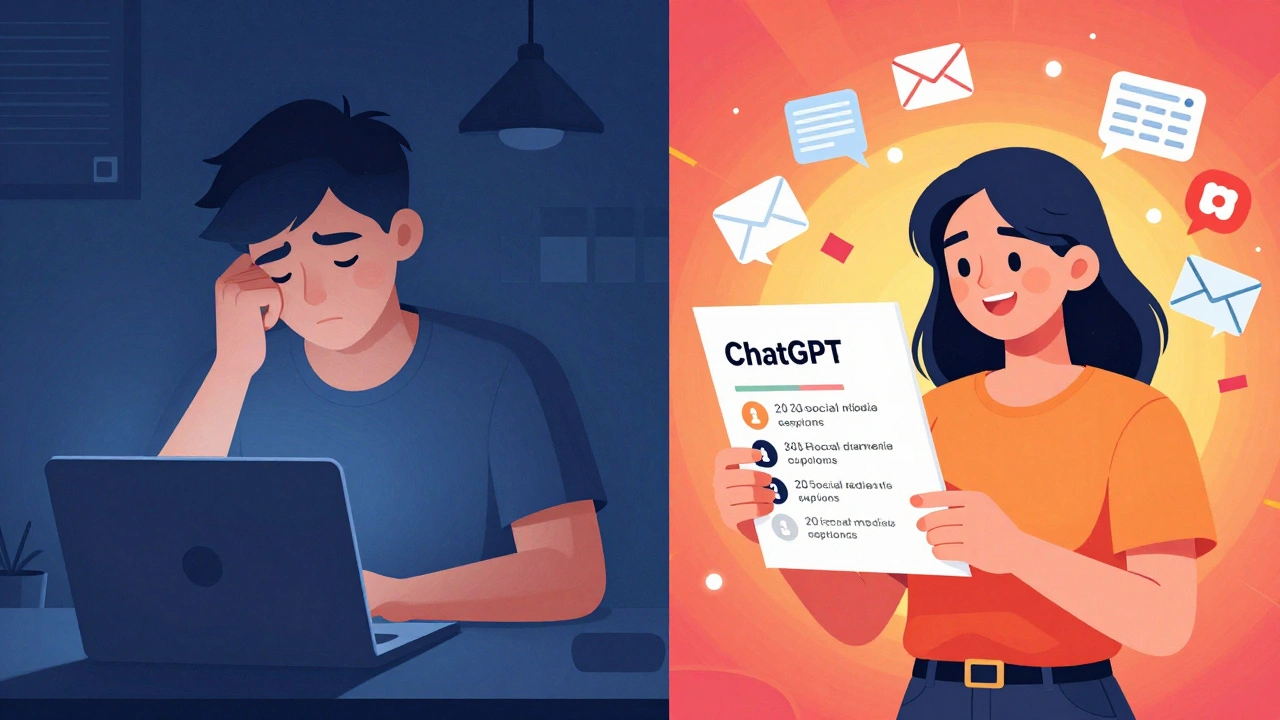
Small business owners use ChatGPT to turn one idea into 20 social media posts in 10 minutes. Content teams use it to draft weekly newsletters while their writers focus on editing and strategy. Even agencies use it to generate 10 variations of ad copy for A/B testing before a single designer touches a layout.
One bakery owner in Portland used ChatGPT to rewrite her menu descriptions after her website traffic dropped. She added sensory language-“crisp, buttery crust,” “warm cinnamon swirl”-and saw a 37% increase in online orders within two weeks. She didn’t hire a copywriter. She didn’t run focus groups. She just asked the right questions.
Here’s what works in practice:
- Turning bullet points into full blog sections
- Generating meta descriptions that actually get clicked
- Writing email subject lines with higher open rates
- Creating FAQ sections that answer real customer questions
- Repurposing one long-form piece into 5 micro-content items
These aren’t hypotheticals. These are daily tasks for marketers, freelancers, and entrepreneurs who stopped wasting time on first drafts.
Why It’s Better Than Traditional Tools
Traditional content tools-grammar checkers, SEO plugins, template generators-help you fix or format. ChatGPT helps you create from scratch.
Grammarly tells you if a sentence is awkward. ChatGPT rewrites it to sound natural. SEMrush suggests keywords. ChatGPT weaves them into readable, engaging copy without sounding robotic. Canva helps you design. ChatGPT gives you the words that make people want to click, read, or buy.
And it learns from you. If you edit its output three times to sound more casual, it starts matching your voice. After five rounds, it doesn’t need prompts like “make it sound like me.” It just does.
That’s why teams using ChatGPT report cutting content production time by 50-70%. Not because they’re lazy. Because they’re smarter about where to spend their energy.
The Hidden Trap: Quality Without Oversight
Here’s the catch: ChatGPT is great-but it’s not perfect. It can invent facts. It can sound authoritative while being wrong. It doesn’t know your brand’s tone unless you teach it.
One SaaS company used ChatGPT to write a product update email. The AI said their software now supports “real-time syncing with Google Sheets.” It didn’t. The feature wasn’t live. Customers complained. The email had to be pulled.
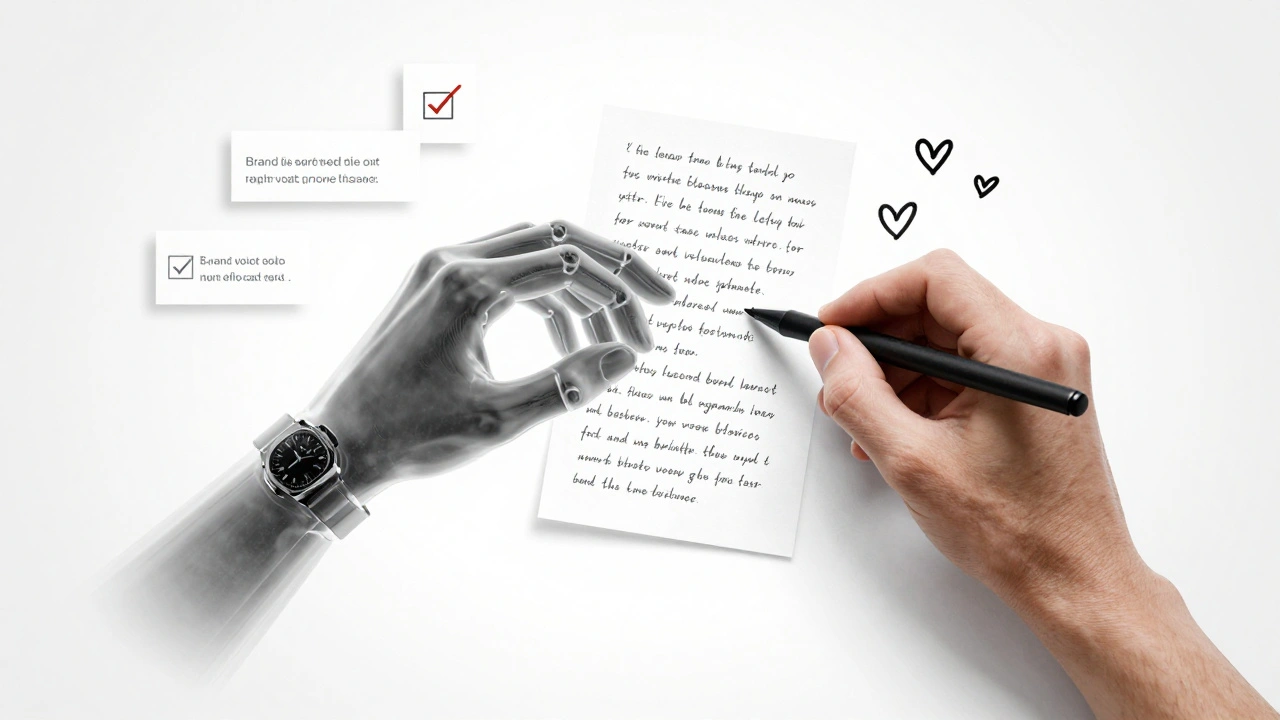
That’s why every piece of AI-generated content needs a human check. Not for grammar. For accuracy, tone, and brand alignment.
Here’s how to avoid mistakes:
- Always verify facts-especially stats, dates, and features
- Read it out loud. If it sounds like a robot wrote it, tweak it
- Use your brand voice guide as a reference
- Don’t publish anything you wouldn’t say yourself
Think of ChatGPT as your fastest intern. Brilliant at drafting. Terrible at fact-checking. You wouldn’t let an intern send out a press release without review. Don’t do it with AI either.
What You Can (and Can’t) Do With It
ChatGPT excels at:
- Generating drafts for blogs, emails, ads, and social posts
- Summarizing long documents into digestible points
- Brainstorming headlines, angles, and content ideas
- Translating tone-formal to casual, technical to simple
- Creating variations for A/B testing
But it struggles with:
- Writing original research or citing unpublished data
- Understanding nuanced brand history or internal jargon
- Recognizing sarcasm, irony, or cultural context without clear guidance
- Producing truly creative concepts-like a viral meme or a breakout campaign
It’s a tool for scaling, not replacing, human creativity. The best content still comes from a human idea, shaped by AI speed.
Getting Started: A Simple Workflow
You don’t need to be a tech expert. Here’s how to start using ChatGPT for content today:
- Start with a clear prompt: “Write a 300-word blog intro about eco-friendly packaging for online fashion stores. Use a friendly, confident tone.”
- Ask for variations: “Give me three more versions with different hooks.”
- Pick the best one and edit it to match your voice.
- Use it as a base for your next piece-add your own examples, stories, or data.
- Save your best prompts in a folder. Reuse them.
That’s it. No complex prompts. No magic formulas. Just clarity, editing, and consistency.
Who’s Really Winning With AI Content?
It’s not the big brands with huge teams. It’s the solopreneurs, the indie creators, the small agencies who use AI to compete with corporations.
A single mom running a handmade soap shop uses ChatGPT to write weekly Instagram captions, product descriptions, and even customer service replies. She spends 2 hours a week on content instead of 10. Her sales are up 45% this year.
A freelance copywriter in Ohio uses AI to draft 80% of her client work. She charges the same rates but takes on 3x more clients. Her income doubled without working longer hours.
They’re not replacing themselves. They’re multiplying their output.
What Comes Next
ChatGPT won’t replace writers. But writers who use ChatGPT will replace writers who don’t.
The future of content isn’t about who writes the most. It’s about who creates the most value with the least friction. ChatGPT removes the grind. It lets you focus on what matters: strategy, storytelling, and connection.
If you’re still writing every word from scratch, you’re working harder than you need to. The tool is here. The results are real. The question isn’t whether you should use it.
It’s when you’ll start.
Can ChatGPT replace human content writers?
No. ChatGPT generates drafts quickly, but it can’t replicate human insight, emotional nuance, or brand-specific knowledge. The best results come from human creativity guided by AI efficiency. Writers who use it become more productive, not obsolete.
Is content created by ChatGPT SEO-friendly?
Yes, if you guide it properly. ChatGPT can include keywords, structure headings, and write meta descriptions. But it doesn’t understand search intent like a human SEO specialist. Always review for relevance, readability, and alignment with user needs-not just keyword density.
How accurate is ChatGPT for factual content?
It’s often wrong. ChatGPT can invent statistics, misstate facts, or cite non-existent studies. Always fact-check anything that needs to be accurate-especially dates, names, numbers, or technical details. Treat its output as a first draft, not a final source.
Can ChatGPT write in my brand’s voice?
Yes, but only if you show it how. Give it examples of your past content, explain your tone (e.g., “professional but approachable”), and correct its mistakes. After a few rounds, it learns your style. Save your best prompts as templates for future use.
What’s the best way to use ChatGPT for social media?
Use it to brainstorm post ideas, write captions, and create variations for A/B testing. Ask for 5 versions of a caption with different tones-funny, serious, inspirational. Pick the one that fits your audience. Always add a personal touch or call-to-action before posting.
Do I need to pay for ChatGPT to use it for content?
You can start with the free version, but the paid version (ChatGPT Plus) is worth it for serious users. It offers faster responses, access to GPT-4, file uploads for context, and better memory of your preferences. For businesses using AI daily, the $20/month cost pays for itself in saved time.
If you’re creating content for your business, blog, or brand, you’re already spending time on it. The only question is whether you’re spending it wisely. ChatGPT doesn’t take away your job-it gives you back your time.


Write a comment