
Imagine you are finally in the zone. You have been playing a racing game for twenty minutes, your reflexes are sharp, and you are about to overtake the leader on the final lap. Suddenly, a thirty-second video for a banking app forces its way onto your screen. You miss the turn. You lose. The frustration is immediate, but so is the question: why does this happen?
This scenario highlights the central tension in modern gaming economics. In-game advertising is a monetization strategy where brands display promotional content within video games, either as static billboards or interactive digital placements. It has become a multi-billion dollar industry, driven by the need to sustain free-to-play models. However, the cost is often measured in player retention and satisfaction. The challenge isn't just about showing an ad; it is about showing the right ad, at the right time, without breaking the immersion that keeps players coming back.
The Evolution from Static Billboards to Dynamic Integration
To understand the impact on player experience, we have to look at how these ads have changed. Early in-game ads were crude. They were static images placed on virtual billboards in racing games like Need for Speed or FIFA. These were relatively harmless because they mimicked real-world environments. A billboard for Coca-Cola in a realistic city setting didn't feel out of place.
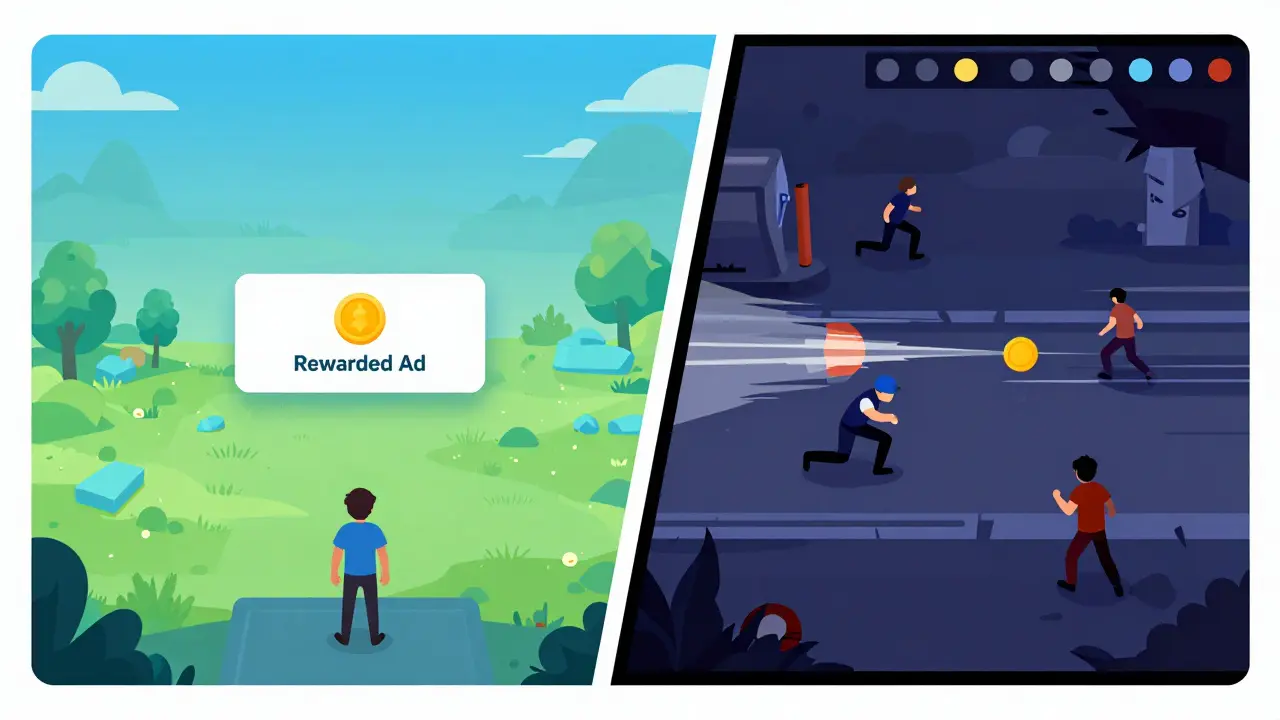
Then came the era of mobile gaming. With the rise of Free-to-Play (F2P) models, developers needed revenue streams that didn't rely on upfront purchases. This led to Rewarded Video Ads, where players voluntarily watch an ad to get extra lives, currency, or power-ups. This model shifted the dynamic significantly. Instead of being forced to watch an interruption, players chose to engage with the ad to progress. Studies from AppLovin and Unity suggest that rewarded ads actually increase session length when implemented correctly, because they give players agency.
However, the line between voluntary engagement and coercive design is thin. When a game makes it nearly impossible to progress without watching multiple ads, the "reward" feels like a tax. This is where the player experience begins to degrade.
The Psychology of Interruption and Flow State
Psychologists define "flow" as a state of complete immersion in an activity. For gamers, flow is the primary source of enjoyment. Any break in this state causes cognitive friction. Research in human-computer interaction shows that interrupting a task mid-action causes higher stress levels than interrupting it during a natural pause.
Consider the difference between two scenarios:
- Scenario A: An ad plays after you complete a level. You have already achieved a goal, so your brain is ready for a brief pause.
- Scenario B: An ad triggers while you are navigating a complex maze or fighting a boss. Your focus is split, and the sudden shift in visual attention causes performance errors.
Scenario B destroys trust. Players begin to associate the game with anxiety rather than fun. This is particularly damaging in competitive genres like Battle Royale titles, where milliseconds matter. Even a one-second delay caused by an ad loading can result in elimination. Over time, this leads to churn-players leaving the game for competitors with smoother experiences.
Native Advertising: Blurring the Lines
A newer approach attempts to solve the immersion problem through Native Advertising. Instead of popping up a separate window, native ads integrate into the game world. For example, a character in a simulation game might wear branded clothing, or a virtual store might sell real-world products.
This method is less intrusive but raises ethical questions about transparency. If a player doesn't realize they are looking at an advertisement, do they feel manipulated later? The Federal Trade Commission (FTC) and other regulatory bodies are increasingly scrutinizing this area, especially when it involves children. Games aimed at younger audiences must clearly distinguish between gameplay and promotional content to avoid legal pitfalls and public backlash.
Moreover, native ads require careful creative direction. A luxury car brand appearing in a gritty, post-apocalyptic shooter creates a jarring dissonance that breaks immersion more severely than a simple pop-up. The ad must fit the aesthetic and tone of the game. This requires collaboration between marketers and game designers, a partnership that is still maturing in the industry.
| Ad Format | Intrusiveness Level | Player Agency | Revenue Potential | Immersion Risk |
|---|---|---|---|---|
| Rewarded Video | Low to Medium | High (Voluntary) | High | Low |
| Interstitial (Pop-up) | High | None (Forced) | Medium | Very High |
| Native Placement | Low | N/A | Medium | Medium (if mismatched) |
| Audio Ads | Medium | Low | Low | High (breaks atmosphere) |
Technical Performance and Latency Issues
Beyond psychology and design, there is a hard technical reality. Ads require data. They load assets, track impressions, and communicate with ad networks. On high-end PCs, this is rarely noticeable. But on lower-end mobile devices, which make up a significant portion of the global gaming market, ad loading can cause frame drops, stuttering, and increased battery drain.
If a game runs at 60 frames per second (FPS) and then dips to 30 FPS while an ad loads, the player perceives this as poor optimization. They may blame the developer's coding skills rather than the ad network. This reputational damage is subtle but cumulative. Over months, reviews decline, and word-of-mouth spreads negativity. Developers must optimize their ad SDKs (Software Development Kits) to ensure minimal impact on performance.

Finding the Balance: Best Practices for Developers
So, is in-game advertising doomed? No. It is essential for keeping many games free and accessible. The key is balance. Successful studios follow several principles:
- Respect Natural Pauses: Never interrupt active gameplay. Place ads between levels, in menus, or during loading screens.
- Offer Choice: Rewarded ads should always be optional. Give players alternative ways to earn rewards, even if they are slower.
- Cap Frequency: Limit the number of ads per session. Three ads in ten minutes is manageable; ten ads in ten minutes is harassment.
- Contextual Relevance: Use data to serve ads that match the game's theme. A puzzle game might feature ads for productivity apps, while a fitness game could promote health supplements.
- Provide an Ad-Free Option: Offer a premium subscription or one-time purchase to remove ads. This caters to whales and dedicated fans who value uninterrupted play.
Companies like Supercell and King have mastered this balance. Their games are heavily monetized, yet they maintain high user ratings because they respect the player's time and intelligence.
The Future: AI and Personalization
Looking ahead, artificial intelligence will play a larger role in in-game advertising. AI can analyze player behavior in real-time to determine the optimal moment to show an ad. It can also generate dynamic ad creatives that adapt to the game's environment. Imagine a billboard in a virtual city that changes its message based on the local weather in the game or the time of day.
However, this brings privacy concerns. Players are increasingly wary of data collection. Regulations like GDPR in Europe and CCPA in California restrict how much data can be used for targeting. Developers must navigate these legal landscapes carefully, ensuring transparency about what data is collected and how it is used.
Ultimately, the impact of in-game ads on player experience depends on execution. Done poorly, they are a nuisance that drives players away. Done well, they are a sustainable funding model that allows developers to create rich, free experiences for millions. The goal is not to eliminate ads, but to make them invisible-or at least, welcome guests rather than unwelcome intruders.
Do in-game ads reduce the quality of a game?
Not necessarily. If ads are integrated thoughtfully, such as through rewarded videos or native placements, they can fund development without harming gameplay. However, frequent, forced interruptions during critical moments definitely degrade quality and player satisfaction.
What is the most annoying type of in-game ad?
Most players find interstitial ads that appear during active gameplay the most annoying. These forced interruptions break immersion, cause performance issues, and often lead to failure in competitive tasks, creating a negative association with the game.
How do rewarded ads benefit players?
Rewarded ads give players agency. They choose to watch an ad in exchange for in-game currency, extra lives, or boosts. This voluntary exchange feels fairer than forced ads and can help non-paying users progress further in the game.
Can in-game ads improve over time?
Yes. Advances in AI allow for better timing and contextual relevance. Native advertising that blends into the game world also reduces disruption. As technology improves, ads can become less intrusive and more personalized, potentially enhancing the experience if done correctly.
Is it legal to use in-game ads in all regions?
Generally, yes, but regulations vary. Regions like the EU and California have strict data privacy laws (GDPR, CCPA) that limit how user data can be used for ad targeting. Developers must ensure compliance with local laws regarding consent and data collection, especially for games targeted at children.


Write a comment