
Most ads today feel the same. Same clichés. Same tone. Same boring calls to action. If you’re still writing ad copy by hand, you’re leaving money on the table. ChatGPT isn’t just a tool for writing emails or summarizing reports-it’s a game-changer for advertising. And it’s not magic. It’s logic, data, and speed working together to make your ads sharper, faster, and way more effective.
Stop Guessing What Works
How many times have you written five versions of a Facebook ad, sent them out, and waited days to see which one got clicks? You’re not alone. But here’s the truth: you don’t need to guess anymore. ChatGPT can generate 50 variations of your ad in under a minute. Not just different words-different angles, tones, and emotional triggers.
Try this: take your best-performing ad from last quarter. Paste it into ChatGPT and ask: ‘Rewrite this ad for busy moms aged 35-45 who care about time-saving solutions, using a friendly, conversational tone.’ Boom. You’ve got a new version tailored to a specific audience. No focus groups. No agency fees. Just results.
Companies using AI-generated ad copy report up to 40% higher click-through rates when they test multiple versions. Why? Because AI doesn’t get tired. It doesn’t favor one style. It tests every possibility you can think of-and a few you never considered.
Turn Data Into Ads That Sell
You’ve got customer data. Sales reports. Website analytics. But are you turning it into better ads? Most people just look at numbers. ChatGPT turns them into stories.
Here’s how: take your top three customer segments. For each, write a short paragraph describing their biggest frustration. Then paste that into ChatGPT and say: ‘Write a 25-word Instagram caption that speaks directly to this pain point and ends with a soft call to action.’
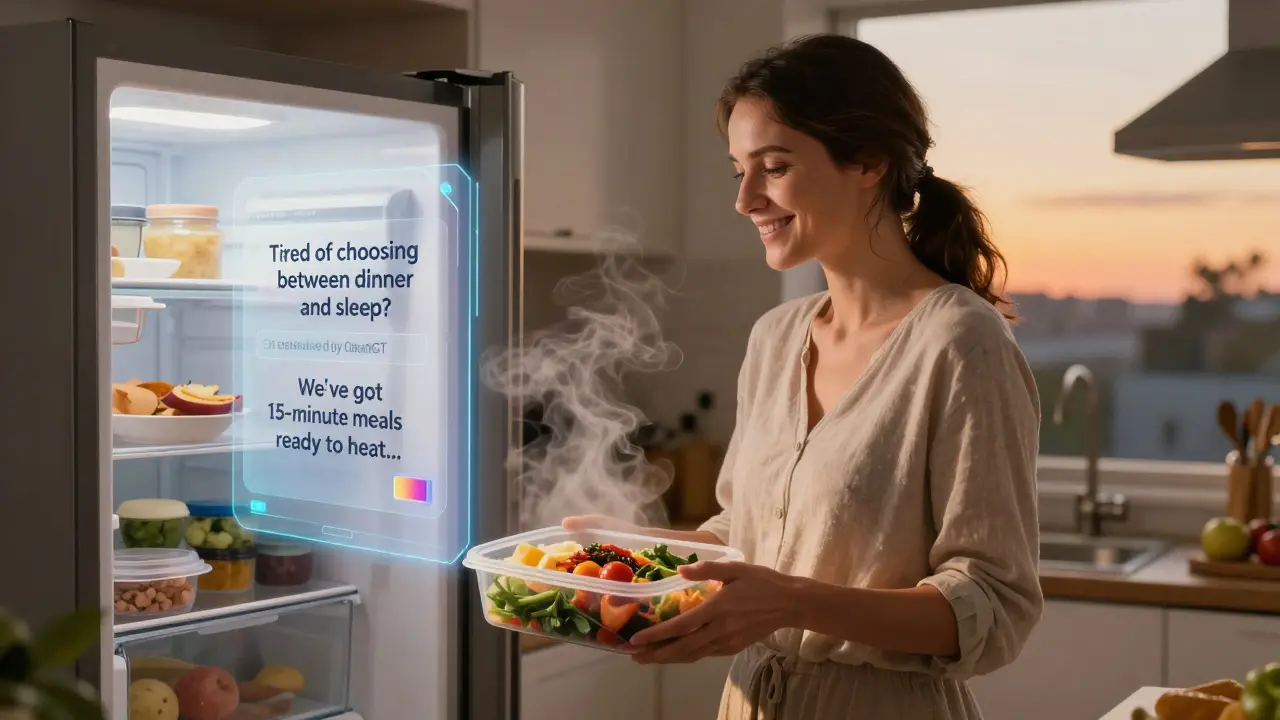
Let’s say you sell meal prep boxes. One segment is single parents working late. Their pain? ‘I’m exhausted by 6 p.m. and just want to feed my kids something healthy without crying in the kitchen.’ ChatGPT might respond: ‘Tired of choosing between dinner and sleep? We’ve got 15-minute meals ready to heat. No chopping. No stress. Just real food for real life.’
That’s not generic. That’s human. And it’s built from your own data.
Personalize at Scale
Personalization used to mean putting someone’s name in an email. Now, it means tailoring the entire message to their behavior, location, and even time of day.
ChatGPT can generate hundreds of unique ad variations based on simple rules. For example:
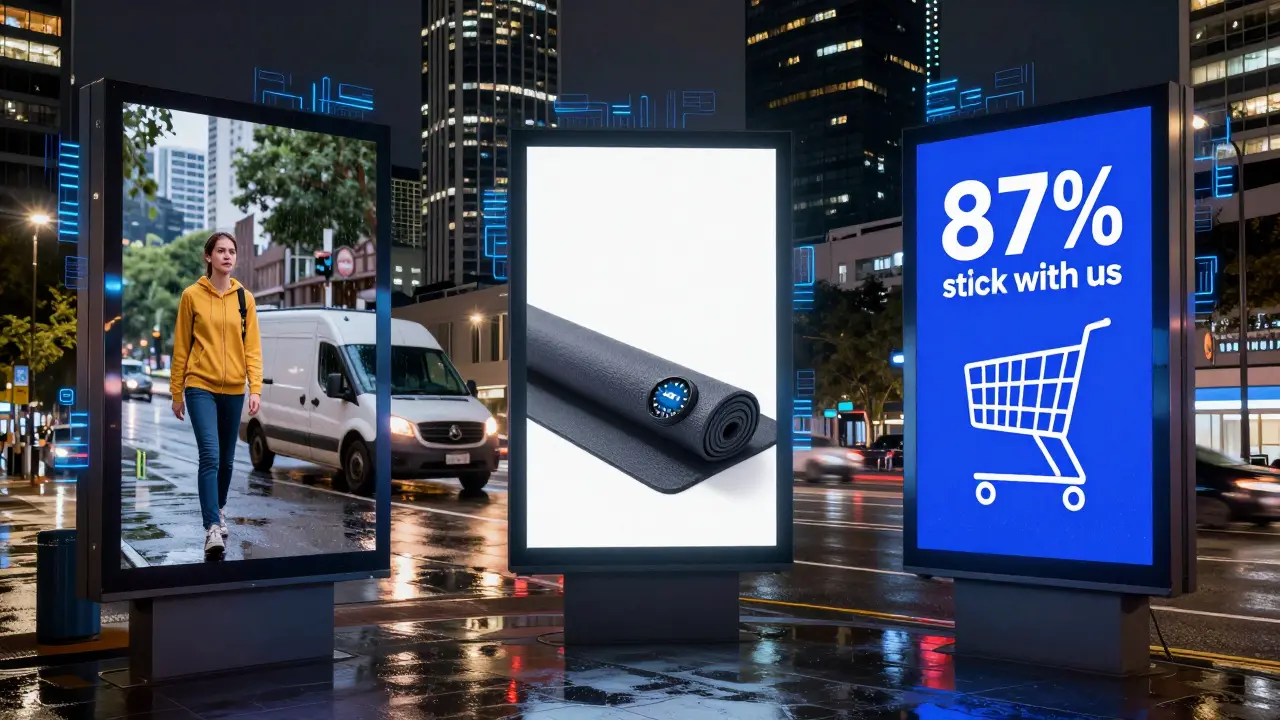
- If the user visited your pricing page but didn’t buy → ‘Still thinking? Here’s why 87% of people who tried us stuck with it.’
- If they’re in Brisbane and it’s raining → ‘Rainy day? We’ve got your cozy night sorted. Free delivery tonight.’
- If they clicked on a yoga mat ad but didn’t check out → ‘Your mat’s waiting. 10% off if you grab it before midnight.’
You don’t need a team of copywriters to do this. You just need a list of triggers and a few prompts. Set it up once, and ChatGPT handles the rest.
Fix Weak Ads in Seconds
Ever write an ad and feel like something’s off? It’s too long. Too salesy. Too vague? ChatGPT can fix it.
Copy your ad into ChatGPT and ask: ‘Make this more concise. Cut fluff. Keep it punchy. Use everyday language.’ Or: ‘Rewrite this to sound less like an ad and more like a friend giving advice.’
One e-commerce brand in Melbourne was struggling with low conversions on their Shopify store. Their original ad: ‘Our premium organic skincare line is formulated with natural ingredients for glowing skin.’
After asking ChatGPT to rewrite it like a real person talking: ‘Your skin’s been through a lot. Let it breathe. No chemicals. No hype. Just gentle, real ingredients that work.’
Click-through rate jumped 32% in two weeks.
Test Faster, Learn Faster
A/B testing used to take weeks. Now, you can run 10 tests in a day.
Here’s a simple system:
- Start with your top-performing ad.
- Ask ChatGPT to create 5 variations: one with humor, one with urgency, one with social proof, one with a question, one with a bold statement.
- Run them all at once on Meta Ads or Google Ads.
- Let the data pick the winner.
- Take the winner and repeat.
This isn’t theory. A small business in Perth ran 14 ad variations in 48 hours using this method. The best one had a 78% lower cost per lead than their previous top performer.
You don’t need to be an expert. You just need to be consistent.
Stop Using Generic Prompts
Don’t just type: ‘Write me an ad.’ That’s like asking a chef to ‘make something tasty.’ You’ll get bland results.
Use this formula for better prompts:
- Who is this for? (e.g., ‘new parents in Sydney’)
- What do they care about? (e.g., ‘sleep, safety, simplicity’)
- What’s the pain point? (e.g., ‘they’re exhausted and don’t have time to research’)
- What action do you want? (e.g., ‘click the link, sign up for the free guide’)
- What tone? (e.g., ‘warm, reassuring, not pushy’)
Example prompt: ‘Write a 30-second YouTube ad script for new parents in Brisbane who need a baby monitor that works without Wi-Fi. They’re tired of complicated tech. Use a calm, reassuring tone. End with: “Sleep easy. No app needed.”’
That’s how you get results.
Watch Out for These Mistakes
ChatGPT isn’t perfect. And if you treat it like a magic wand, you’ll end up with ads that feel robotic or off-brand.
Here’s what to avoid:
- Using the same tone for everything. Your luxury brand shouldn’t sound like a discount store.
- Copying word-for-word. Always tweak the output. Add your voice. Add your local references.
- Ignoring compliance. If you’re in health, finance, or real estate, check local ad rules. AI doesn’t know the law.
- Forgetting visuals. ChatGPT writes text. You still need images or videos that match the message.
Best practice: Use ChatGPT to generate ideas, then edit like a human. Keep the structure. Change the words. Make it yours.
What You Can Do Tomorrow
You don’t need to overhaul your whole strategy. Start small.
- Take one ad that’s underperforming.
- Use the prompt formula above to rewrite it.
- Run both versions side by side for 72 hours.
- See which one wins.
- Do it again next week.
Within a month, you’ll have a library of proven ad templates. You’ll stop wasting time on guesswork. And you’ll start seeing real growth-not just clicks, but conversions.
This isn’t about replacing marketers. It’s about making them faster, smarter, and more creative. The best advertisers aren’t the ones who write the most. They’re the ones who test the most-and learn the fastest.
ChatGPT doesn’t write your ads. You do. It just gives you more options. More speed. More insight.
It’s time to stop doing what everyone else is doing. Start using AI to do what no one else is.
Can ChatGPT write ads for any industry?
Yes, but the results depend on how well you guide it. ChatGPT doesn’t know your business unless you tell it. Give it clear details about your audience, product, and goals, and it can generate effective ads for healthcare, finance, retail, SaaS, or local services. The key is specificity-vague prompts lead to vague ads.
Is using ChatGPT for ads ethical?
Yes, if you’re transparent and responsible. AI is a tool, not a replacement for honesty. Don’t use it to mislead customers, fake testimonials, or hide your brand’s identity. Always review and edit output. Ethical advertising means using AI to be clearer, not trickier.
Do I need to pay for ChatGPT to use it for ads?
You can start with the free version, but ChatGPT Plus ($20/month) is worth it for advertising. It gives you faster responses, better reasoning, and access to GPT-4, which handles complex prompts and long-form content much better. For anyone running paid ads regularly, the cost pays for itself in saved time and better results.
Can ChatGPT help with video or audio ad scripts?
Absolutely. Ask it to write a 15-second radio ad, a TikTok script, or a YouTube hook. It can structure pacing, add sound cues, and even suggest background music tone. Just specify the format: ‘Write a 30-second TikTok script for a coffee brand targeting students, with upbeat music and quick cuts.’
How do I keep my brand voice consistent with AI-generated ads?
Create a one-page brand voice guide: What words do you use? What do you avoid? What’s your tone-playful, serious, witty? Paste this guide into ChatGPT before every prompt: ‘Use this voice: [paste your guide].’ Over time, ChatGPT learns your style and gets better at matching it.
Next Steps
If you’re still writing ads the old way, you’re working harder than you need to. Start with one ad this week. Use the prompt formula. Test it. See what happens. You might be surprised how much faster you can grow when you stop guessing and start experimenting.
The best advertising isn’t about being the loudest. It’s about being the most relevant. And with ChatGPT, you can be both.


Write a comment