
You are staring at a blank screen. It is Tuesday morning, and you need three Facebook posts, two ad variations, and a response to a tricky customer comment before noon. Sound familiar? You are not alone. The pressure to maintain a constant presence on Facebook is the world's largest social networking platform with over 3 billion monthly active users is exhausting. But what if you had a tireless assistant that never sleeps, never gets writer’s block, and can generate ideas in seconds?
That assistant is ChatGPT is an advanced large language model developed by OpenAI capable of generating human-like text, code, and analysis. Integrating this AI tool into your Facebook workflow isn't just about saving time; it is about working smarter. By leveraging the power of generative AI, you can scale your content production, refine your advertising spend, and engage with your community more effectively.
Why Combine AI with Your Social Media Strategy?
The landscape of digital marketing has shifted. In 2026, audiences have shorter attention spans and higher expectations for relevance. Posting generic updates no longer cuts it. You need personalization at scale. This is where the synergy between human creativity and artificial intelligence becomes critical.
When you use ChatGPT for Facebook, you are not replacing your voice; you are amplifying it. Think of the AI as a brainstorming partner that never runs out of energy. It helps you overcome the initial friction of starting a post or an ad campaign. Instead of spending hours agonizing over the first sentence, you spend minutes refining a draft that is already 80% there. This shift allows you to focus on strategy, tone, and connection rather than just output.
Creating Scroll-Stopping Facebook Posts
Content creation is the backbone of any successful Facebook page. Whether you run a local bakery or a global SaaS company, you need consistent, engaging material. ChatGPT excels at generating diverse content formats quickly.
Here is how you can use it to build a robust content calendar:
- Hook Generation: The first line of your post determines whether people read the rest. Ask ChatGPT to "Write 10 catchy hooks for a post about sustainable gardening tips." It will provide options ranging from question-based hooks to controversial statements that spark debate.
- Variety in Formats: Don't stick to one style. Use the AI to convert a blog post summary into a short, punchy Facebook update. Or, ask it to turn a list of product features into a storytelling narrative that highlights customer benefits.
- Tone Adjustment: Different brands have different voices. If your brand is playful, tell the AI, "Rewrite this announcement in a witty, casual tone suitable for millennials." If you are B2B, request a "professional yet approachable tone."
For example, imagine you sell eco-friendly cleaning products. Instead of writing "Buy our new soap," you might prompt ChatGPT: "Create a Facebook post that explains why microplastics in traditional sponges are bad, using a friendly and educational tone, ending with a soft call-to-action for our cellulose sponges." The result is a value-driven post that educates while selling, which performs significantly better than hard-sell tactics.
Optimizing Facebook Ad Copy for Conversions
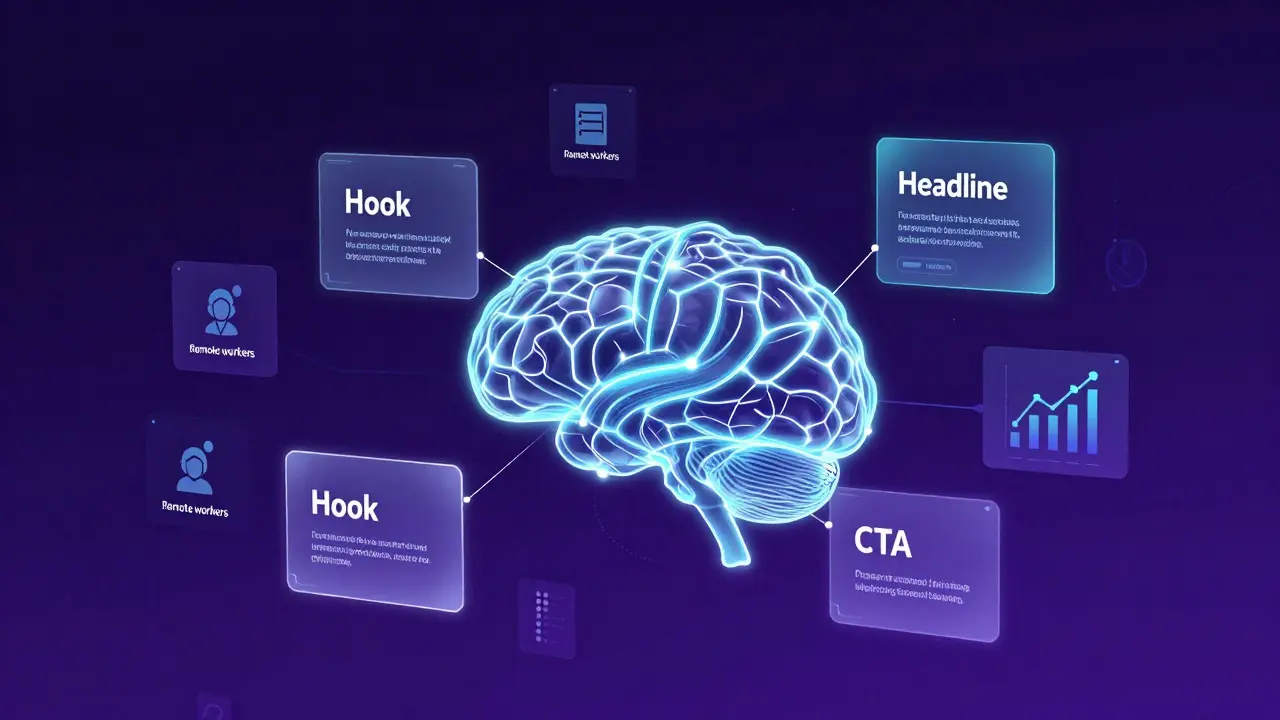
Running ads on Facebook requires precision. Every dollar spent needs to earn its keep. One of the most effective ways to use ChatGPT is for A/B testing ad copy. Writing multiple variations of headlines, primary text, and descriptions manually is tedious. With AI, you can generate dozens of variants in minutes.
Consider the structure of a high-performing Facebook ad:
- Headline: Needs to be concise and benefit-driven.
- Primary Text: Should address pain points and offer a solution.
- Description: Optional but useful for adding credibility or urgency.
You can feed ChatGPT your product details and target audience persona. For instance: "Write five variations of Facebook ad copy for a premium noise-canceling headphone brand targeting remote workers. Focus on productivity and focus. Include emojis and a clear CTA."
The AI will produce distinct angles. One might focus on the technical specs (battery life, decibel reduction), while another focuses on the emotional benefit (peace of mind during Zoom calls). By testing these variations, you gather data on what resonates with your specific audience. This iterative process, powered by AI speed, leads to lower cost-per-click (CPC) and higher conversion rates over time.
Enhancing Community Engagement and Customer Service
Social media is a two-way street. Engagement metrics like comments, shares, and replies signal to the Facebook algorithm that your content is valuable. However, responding to every comment promptly can be overwhelming, especially for growing brands.
ChatGPT can help you manage this influx without sounding robotic. Here is how:
- Drafting Responses: Paste a customer's complex question into ChatGPT and ask it to draft a helpful, empathetic response. You can then tweak it to add your personal touch before posting.
- Handling Negative Feedback: Dealing with criticism requires tact. Ask the AI to "Draft a professional and apologetic response to a customer complaint about late shipping, offering a discount code for their next order." This ensures consistency and de-escalation.
- Generating Discussion Starters: Stagnant pages lose followers. Use ChatGPT to create questions that encourage interaction. For example, "Give me 5 open-ended questions to ask my audience about their summer travel plans to boost comments."
Remember, the goal is authenticity. Always review AI-generated responses. Add a personal anecdote or specific detail to make it feel human. The AI provides the skeleton; you provide the soul.
Strategic Planning and Trend Analysis
Beyond daily tasks, ChatGPT can assist with high-level strategy. You can use it to analyze trends, brainstorm campaign themes, or even critique your current approach.
Try prompting: "Based on current social media trends in 2026, suggest three viral-worthy campaign ideas for a fitness app targeting busy parents." The AI can synthesize information about popular challenges, video formats (like Reels), and psychological triggers to give you actionable ideas.
You can also use it for competitor analysis. While ChatGPT doesn't browse the live web in real-time unless configured to do so, you can paste snippets of competitor posts and ask, "What is the underlying strategy of these posts? What emotional triggers are they using?" This helps you understand the market landscape and differentiate your brand.
| Task | Manual Approach | AI-Assisted Approach |
|---|---|---|
| Content Ideation | Hours of brainstorming, prone to creative blocks | Minutes to generate 50+ unique ideas |
| Ad Copy Variations | Difficult to write many distinct versions | Rapid generation of A/B test variants |
| Customer Replies | Inconsistent tone, slow response times | Consistent, fast drafts ready for personalization |
| Tone Consistency | Varies based on writer's mood/fatigue | Strict adherence to defined brand voice guidelines |

Pitfalls to Avoid When Using AI on Facebook
While powerful, ChatGPT is not infallible. To maintain trust with your audience, you must navigate certain risks carefully.
Hallucinations: AI can sometimes present false facts as truth. Always verify statistics, dates, and product claims before publishing. Never let AI publish factual data without human verification.
Generic Tone: Over-reliance on AI can lead to bland, cookie-cutter content that lacks your brand's unique personality. Use the AI as a starting point, not the final word. Inject your humor, values, and stories.
Data Privacy: Be cautious when feeding sensitive customer data or proprietary business secrets into public AI models. Anonymize data before using it for prompts.
Next Steps for Implementation
Start small. Pick one area, such as weekly post ideation, and integrate ChatGPT into your workflow. Create a library of prompts that work for your specific niche. Over time, you will develop a rhythm that balances efficiency with authenticity. The key is to remain the pilot, letting AI handle the navigation.
Is it free to use ChatGPT for Facebook marketing?
Yes, there are free tiers available for ChatGPT that allow basic text generation. However, paid subscriptions often provide faster processing speeds, priority access during peak times, and advanced reasoning capabilities, which can be beneficial for high-volume marketing tasks.
Will Facebook penalize posts created by AI?
Currently, Facebook does not penalize content simply because it was AI-assisted. However, the algorithm favors authentic engagement. If AI-generated content feels spammy or low-quality, users will ignore it, leading to lower reach. Transparency is key; some brands disclose AI usage to build trust.
Can ChatGPT write Facebook Ad headlines?
Absolutely. ChatGPT is excellent at generating concise, impactful headlines. You can specify character limits and key selling points to ensure the headlines fit Facebook's ad format requirements and capture attention immediately.
How do I ensure my brand voice remains consistent with AI?
Create a detailed brand voice guide. Include examples of 'do' and 'don't' say, preferred vocabulary, and tone descriptors (e.g., witty, authoritative, empathetic). Feed this context into your ChatGPT prompts to steer the output closer to your desired style.
Does ChatGPT know about the latest Facebook trends?
Depending on the version and settings, ChatGPT may have access to recent data. However, for the very latest viral trends or breaking news, it is best to supplement AI suggestions with real-time research from social listening tools or direct observation of trending topics on the platform.



Write a comment