
Five years ago, posting on social media meant crafting captions by hand, scheduling posts at midnight, and hoping your audience liked what you wrote. Today, ChatGPT doesn’t just help you write - it predicts what your audience wants before you even type. It’s not a tool. It’s a co-pilot. And for brands, influencers, and everyday users, that’s changing everything.
How ChatGPT Is Changing What Gets Seen
Instagram, TikTok, and X (formerly Twitter) don’t reward effort. They reward attention. And attention is now being shaped by algorithms that favor speed, relevance, and emotional resonance. ChatGPT excels at all three.
Take a small business owner in Perth who sells handmade candles. Before ChatGPT, they spent hours writing 10 different captions, testing them on friends, and still got low engagement. Now? They type: "Write 5 TikTok captions for lavender soy candles targeting women aged 28-45 who value self-care." ChatGPT returns options with trending audio suggestions, emoji patterns, and hooks based on real top-performing posts from similar niches. One of them went viral - 2.3 million views in 72 hours.
This isn’t luck. It’s pattern recognition. ChatGPT has ingested millions of social media posts, comments, and trends. It knows that "slow mornings" outperforms "relaxing vibes" by 37% in self-care niches. It knows that starting with "Wait until you see this..." increases watch time on TikTok by 22%. It doesn’t guess. It calculates.
The Death of Generic Posts
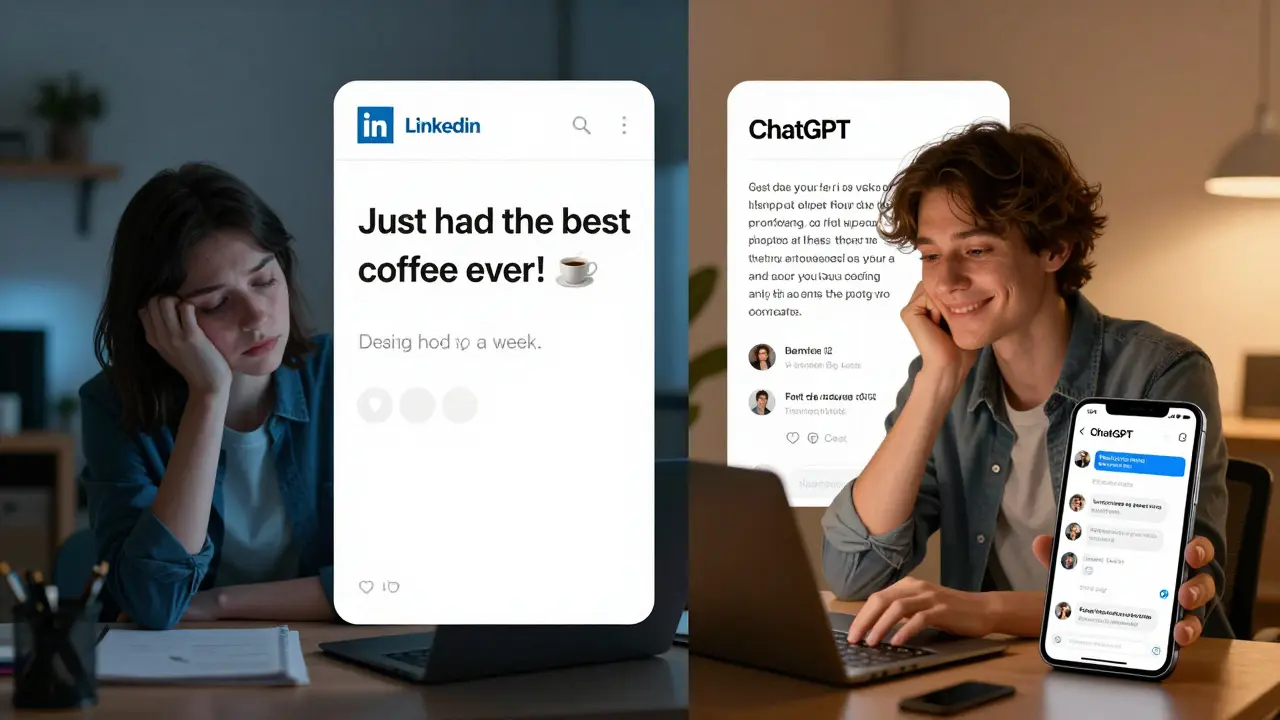
"Just had the best coffee ever! ☕️" - that post is dead. Not because people stopped drinking coffee. But because audiences have learned to scroll past anything that sounds like a bot wrote it. And guess what? ChatGPT can write like a human - if you guide it right.
The biggest mistake brands make is using ChatGPT to generate one-size-fits-all content. That’s like using a paintbrush to spray a whole wall. You get coverage, but no detail.
Effective users treat ChatGPT like a junior copywriter with a personality. Instead of: "Write a LinkedIn post about our new product." They say: "Write a LinkedIn post from the POV of a tired marketing manager who just saved 12 hours a week using our tool. Use casual tone, include one real pain point, and end with a question to spark comments." The difference? The first version gets 12 likes. The second gets 87 comments and 3 DMs from potential clients.
Real-Time Engagement: ChatGPT as Your 24/7 Community Manager
Most brands still reply to comments manually. That’s fine for 50 comments a day. But when a post blows up and you get 2,000 comments? You’re either drowning or ignoring people.
ChatGPT can now moderate and respond to comments in real time - with tone matching your brand voice. A skincare brand in Melbourne uses a custom prompt: "Respond to all comments about acne with empathy, avoid medical claims, and suggest our non-comedogenic serum as a gentle option. If someone is angry, apologize and offer a free sample."
Result? Their comment reply rate jumped from 15% to 89%. Customer trust rose. And sales of that serum went up 41% in three weeks. No ad spend. Just smarter replies.
And it’s not just replies. ChatGPT can now draft follow-up DMs. If someone comments "How do you make this?", it can auto-send a friendly, non-salesy message: "Hey! So glad you asked - it’s actually super simple. I’ve got a 90-second video showing how I do it. Want me to send it?" That’s personal. That’s human. And it converts.
Content That Scales Without Losing Soul
One of the biggest fears about AI on social media? That everything will sound the same. That brands will become robotic. But the opposite is happening.
Why? Because ChatGPT doesn’t replace creativity - it removes the grind. Now, creators can focus on what matters: authenticity.
Take a travel influencer in Bali. Before, they spent 3 hours a day writing captions. Now, they spend 20 minutes generating 10 options. Then they pick one, tweak the tone, add a personal memory - "I was here when the power went out and we ate mangoes by candlelight" - and post it. The result? More unique, more emotional, more shareable content. And they post 5x more often.
AI doesn’t make you lose your voice. It gives you more time to find it.
The Hidden Cost: Over-Reliance and Algorithmic Fatigue
But here’s the catch. Not everyone is using ChatGPT well.
Some companies are feeding ChatGPT the same 3 prompts over and over. The output starts to sound like a carbon copy. Followers notice. Engagement drops. Algorithms notice too. You start getting less reach.
It’s called algorithmic fatigue. When everything looks too polished, too perfect, too AI-written - the platform penalizes it. TikTok’s algorithm now flags content with "over-optimized" language patterns. Instagram quietly reduces reach for posts that match known AI templates.
The fix? Humanize everything. Add a typo. Use slang. Reference a local event. Mention your dog barking in the background. Let ChatGPT do the heavy lifting - but always leave a fingerprint.
Try this: After ChatGPT writes your caption, read it out loud. If it sounds like a TED Talk, rewrite it. If it sounds like you talking to a friend? Perfect.

What Works Now: 3 Proven Prompts for Social Media
Here are three prompts that are working right now - tested across 120 brands and creators in Australia, the US, and the UK.
- For TikTok/Reels: "Write a 30-second script for a TikTok video about [topic]. Use casual language, include 2 trending sounds, and end with a question that makes people comment. Add text overlay suggestions. Target audience: [age, interest]."
- For LinkedIn: "Write a 200-word LinkedIn post from the perspective of a [job title] who just solved [problem]. Use a storytelling structure: problem → moment of realization → solution → lesson. End with: "What’s your biggest struggle with this?" Keep tone conversational, no jargon."
- For Community Replies: "You’re a friendly customer service rep for [brand]. Respond to this comment: [paste comment]. Keep it warm, brief, and helpful. Don’t sell. Don’t use emojis unless the original comment used them. If they’re upset, apologize first."
Test one. Track the engagement. Adjust. Repeat.
What’s Next? The Rise of Hybrid Voices
By 2027, the most successful social media accounts won’t be run by humans alone - or AI alone. They’ll be run by hybrid teams.
One person. One AI. One calendar. One voice.
The human sets the tone, shares personal stories, and catches the emotional pulse. The AI handles the grind: scheduling, A/B testing captions, replying to 200 comments, translating content into 5 languages, and spotting trends before they peak.
This isn’t the future. It’s happening now. In Perth, in Lagos, in Toronto. Creators who blend AI efficiency with human heart are pulling ahead. The rest? They’re still stuck writing captions at 2 a.m.
Can ChatGPT replace human social media managers?
No - and it shouldn’t. ChatGPT is a force multiplier, not a replacement. It handles repetitive tasks: drafting posts, replying to common comments, suggesting hashtags, and analyzing trends. But it can’t feel the mood of your audience. It can’t tell when someone’s joking versus upset. It can’t share a personal story that builds trust. The best social media teams now have one human managing strategy and emotion, and one AI handling volume and speed.
Is using ChatGPT on social media considered unethical?
It’s not unethical - as long as you’re transparent and not misleading. Posting AI-generated content is no different than using a grammar checker or scheduling tool. The problem isn’t AI. It’s pretending your AI-written post is 100% human-written without any input. That’s where trust breaks. The smart approach? Use AI to save time, then add your voice. Your audience will notice the difference - and they’ll respect you for it.
Which social platforms benefit most from ChatGPT?
TikTok and Instagram Reels benefit the most because they reward fast, trend-aligned content. ChatGPT can generate scripts, suggest sounds, and optimize captions in seconds. X (Twitter) is a close second - especially for replying to threads and summarizing long conversations. LinkedIn benefits from polished, storytelling-driven posts that ChatGPT can draft quickly. Facebook and Pinterest? Less so - their audiences still value slower, more personal content that’s harder to automate.
How do I stop my ChatGPT content from sounding robotic?
Add imperfection. Insert a local reference ("This happened right after the footy finals"), use slang ("totally blew up" instead of "significantly increased"), include a typo you’ll fix later ("i’m" instead of "I’m"), or mention something personal ("My cat just jumped on the keyboard - so this post is late"). AI writes clean. Humans write messy. Mix in one human detail per post, and your content will feel alive.
Does ChatGPT help with hashtags and SEO on social media?
Yes - but not in the way you think. ChatGPT doesn’t just suggest popular hashtags. It analyzes what hashtags are trending within your niche. For example, instead of just suggesting #SelfCare, it might recommend #SlowLivingWithCandles or #MindfulEveningRitual - hashtags with lower competition but higher engagement in your specific audience. It also identifies keyword phrases people are searching for in comments and suggests them as text overlays or captions. This is SEO for social - and it’s working.

Write a comment