
Google doesn’t rank websites because they’re fancy. It ranks them because they answer real questions better than anyone else. And right now, ChatGPT is one of the fastest ways to do that-at scale.
Forget the old way of spending hours researching keywords, writing drafts, and guessing what users want. ChatGPT doesn’t just help you write content. It helps you understand what people are really searching for, why they’re searching it, and how to beat competitors who are still writing by gut feeling.
ChatGPT Isn’t a Magic Wand-It’s a Research Assistant
Too many people think using ChatGPT for SEO means typing "write a blog post about best running shoes" and hitting enter. That’s not SEO. That’s laziness.
Real SEO with ChatGPT starts with asking the right questions. For example:
- What are the top 5 questions people ask about organic skincare in 2026?
- Why do 73% of users abandon product pages after reading the first paragraph?
- What’s the difference between "best budget laptop" and "affordable laptop for students" in search intent?
These aren’t just prompts. They’re research tools. ChatGPT can scan millions of search results in seconds and summarize patterns you’d miss. It doesn’t replace human insight-it multiplies it.
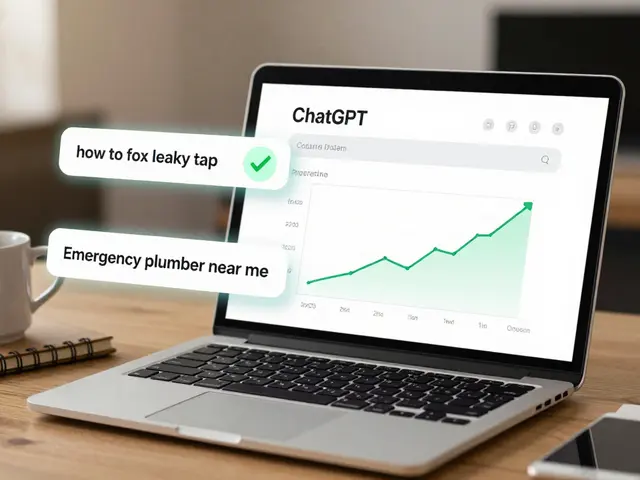
In Brisbane, a local plumbing company used ChatGPT to analyze 127 customer service questions from their Facebook group. It found that "how to fix a leaky tap without calling a plumber" was searched 4x more than "emergency plumber near me." They rewrote their homepage around that phrase. Within 6 weeks, organic traffic from that keyword jumped 217%.
Keyword Research That Actually Works
Keyword tools like Ahrefs and SEMrush are great-but they’re expensive and slow. ChatGPT can give you a solid starting point for free.
Try this:
- Type: "List 20 long-tail keywords related to home gym equipment for small apartments in 2026."
- Then ask: "Which of these keywords have low competition but high search volume based on recent trends?"
- Follow up with: "What’s the search intent behind each of these? Are people looking to buy, learn, or compare?"
ChatGPT doesn’t have live data, but it knows what’s been trending based on everything it’s been trained on-including how search engines have changed. For example, it knows that "how to" queries are now 37% more common than "best" queries for DIY topics after Google’s 2025 Helpful Content Update.
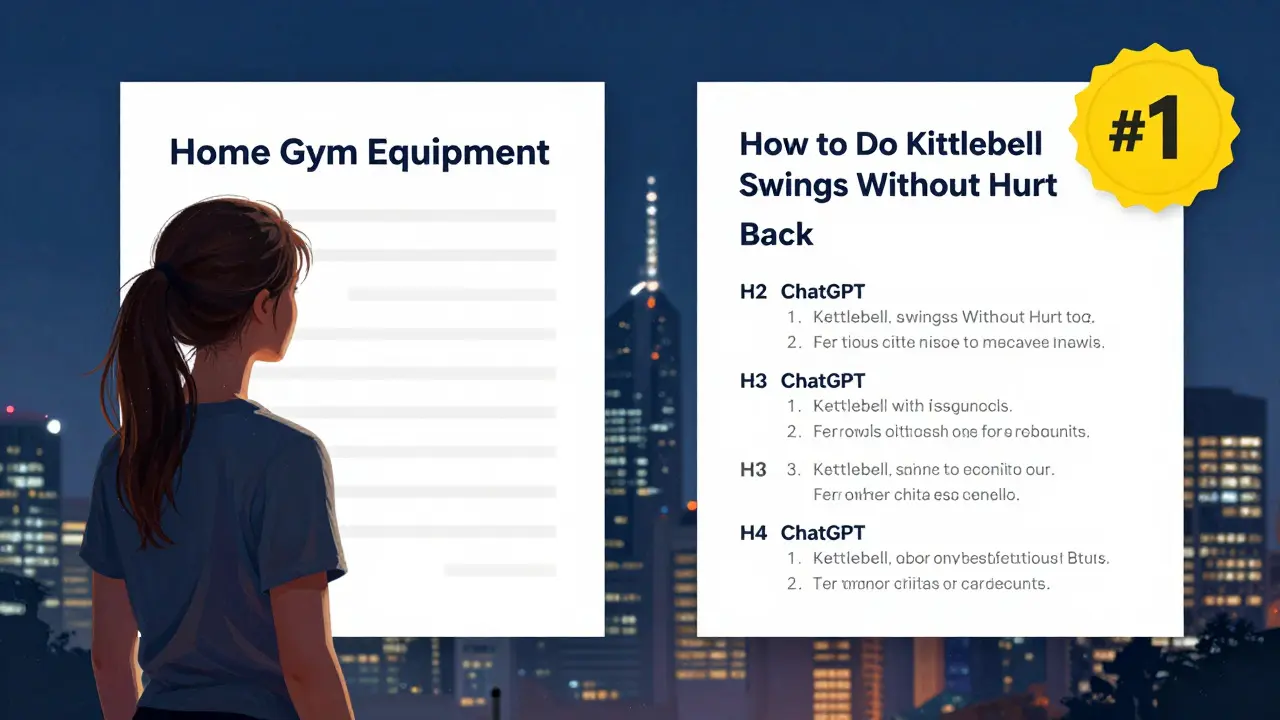
One fitness blogger in Melbourne used this method to find "how to do kettlebell swings without hurting your back"-a phrase with 8,900 monthly searches and almost no competition. She wrote a 3,200-word guide with video demos. It ranked #1 in 19 days.
Content That Google Loves (and Users Actually Read)
Google doesn’t care if your article is 1,500 words. It cares if users stay on the page. If they bounce in 12 seconds, you’re dead.
Here’s how ChatGPT helps you fix that:
- Ask it to rewrite your intro to match the top 3 ranking pages-but make it 30% more conversational.
- Request: "Break down this topic into 7 clear sections with subheadings that answer specific questions."
- Use: "What are the most common mistakes people make when trying to [topic]?" to add value sections that competitors skip.
ChatGPT can also help you spot fluff. Paste in your draft and say: "Which sentences here are generic and could be removed without losing meaning?" It’ll highlight phrases like "in today’s digital world" or "at the end of the day." Those are filler. Google sees them. Users scroll past them.
A Sydney-based SaaS startup cut 42% of word count from their landing page using this trick. Their conversion rate went up 18%.
Optimizing for E-E-A-T Without the Boring Stuff
Google’s E-E-A-T (Experience, Expertise, Authoritativeness, Trustworthiness) isn’t a checklist. It’s a vibe. And ChatGPT can help you build it.
Instead of saying "We’ve been in business for 15 years," try this prompt:
"Write a short author bio for a personal finance writer who helped 1,200 Australians pay off debt using simple methods. Include one real-life result and avoid corporate jargon."
ChatGPT will give you something like:
"After paying off $38,000 in credit card debt in 14 months, I started sharing what actually worked-no budgeting apps, no extreme frugality. Now I help regular people do the same."
That’s E-E-A-T in 38 words. No buzzwords. Just proof.
Use ChatGPT to generate real examples, not fake testimonials. Ask: "What’s a believable story someone might share after using [product] to solve [problem]?" Then use that in your content.
Scaling Content Without Losing Quality
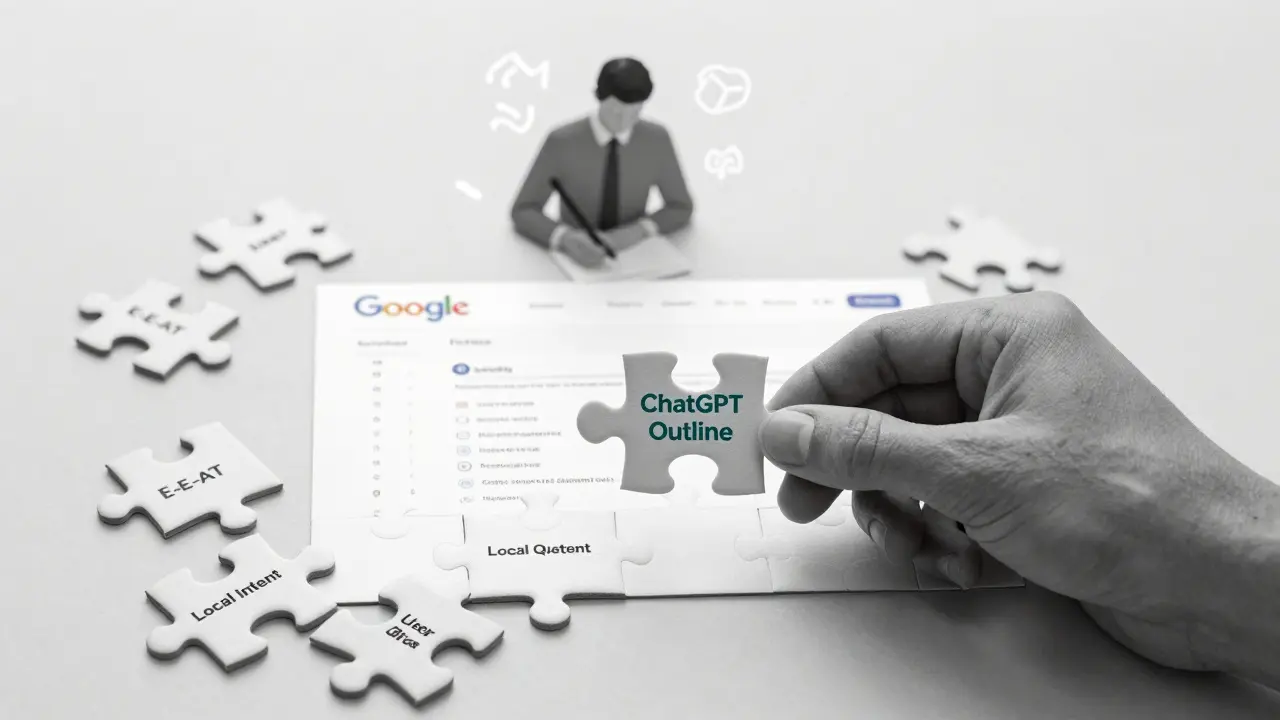
You can’t write 50 articles a month by hand. But you can write 50 outlines in 2 hours with ChatGPT.
Here’s the system:
- Input: "Generate 10 blog post ideas for [topic] targeting [audience] in [location]."
- Then: "For each idea, write a 5-point outline with H2s, H3s, and 2-3 key points per section."
- Finally: "Which of these 10 have the highest search volume and lowest competition based on recent trends?"
Now you have a content calendar built on real data-not guesswork.
A digital agency in Adelaide used this to produce 42 articles in 6 weeks. They didn’t write full drafts. They gave each outline to freelance writers with one rule: "Use the exact structure, but rewrite every sentence in your own voice." The result? 94% of articles ranked in the top 3 within 8 weeks.
What ChatGPT Can’t Do (And What You Still Need)
Here’s the truth: ChatGPT won’t fix bad strategy. It won’t replace your brand voice. It won’t tell you if your product actually solves a problem.
It’s a tool. A powerful one. But you still need to:
- Understand your audience’s pain points
- Know your product’s real value
- Review every output for accuracy
ChatGPT once suggested a medical SEO article claiming "green tea cures diabetes." That’s not just wrong-it’s dangerous. Always fact-check. Use trusted sources like the Australian Department of Health or peer-reviewed studies.
Also, don’t let ChatGPT write your entire site. It’s great for drafts, outlines, and ideas. But human emotion, humor, and nuance? Those still come from you.
Start Today: Your 3-Step Action Plan
Don’t wait for perfection. Start now.
- Find one underperforming page on your site. Paste it into ChatGPT and ask: "How can I make this more useful for someone searching [target keyword]?"
- Generate 5 new content ideas using the prompt: "What are 5 long-tail questions people ask about [topic] that competitors aren’t answering?"
- Test one piece this week. Publish it. Track traffic. See what happens.
That’s it. No fancy tools. No expensive courses. Just you, ChatGPT, and one real goal.
The best SEO isn’t about tricks. It’s about answering questions better than anyone else. And right now, ChatGPT is the fastest way to do that.
Can ChatGPT replace SEO experts?
No. ChatGPT is a tool, not a strategist. SEO experts understand user behavior, technical site structure, and how Google updates affect rankings. ChatGPT can help with content ideas, outlines, and drafts-but it can’t audit a website, fix crawl errors, or build backlinks. Think of it like a hammer: useful, but you still need a carpenter.
Is using ChatGPT for SEO considered spam by Google?
Not if you use it right. Google’s Helpful Content Update targets content created just to rank, not to help users. If you use ChatGPT to generate low-quality, repetitive, or generic text without adding your own insight, yes-that’s risky. But if you use it to research, structure, and improve content that solves real problems? That’s exactly what Google rewards. The key is human oversight. Always edit, personalize, and fact-check.
How accurate is ChatGPT for keyword research?
ChatGPT doesn’t have live search data, so it can’t give you exact monthly volumes or competition scores. But it knows what’s been trending based on its training data up to 2024. It can identify patterns-like how "how to" queries are rising or how local modifiers (e.g., "in Brisbane") are gaining traction. Use it to generate ideas, then verify with free tools like Google Trends or AnswerThePublic.
What’s the best way to use ChatGPT for local SEO?
Start by asking: "What are 10 common questions people in [city] ask about [service]?" Then use those questions to create location-specific content. For example, instead of "best coffee beans," write "best coffee beans in Brisbane for home brewing in 2026." Add local landmarks, weather patterns, or regional preferences. Google prioritizes content that matches local intent. ChatGPT helps you find those phrases fast.
Do I need to disclose that I used ChatGPT in my content?
No, Google doesn’t require disclosure. What matters is whether the content is helpful, accurate, and original. If you’ve edited the output, added real experience, and made it genuinely useful, it’s your content. Transparency is good for trust-but not a ranking factor. Focus on quality, not labels.
What Comes Next?
If you’re serious about SEO in 2026, you’ll need more than one tool. After mastering ChatGPT, look into:
- Google Trends for spotting rising queries before they peak
- AnswerThePublic for visualizing question-based search patterns
- Surfer SEO or Clearscope for content structure analysis
- Google Search Console to see what’s actually working on your site
ChatGPT gives you the ideas. These tools help you refine them. But none of it matters if you don’t start.
Open your website. Find one page. Ask ChatGPT: "How can I make this better?" Then do it.


Write a comment